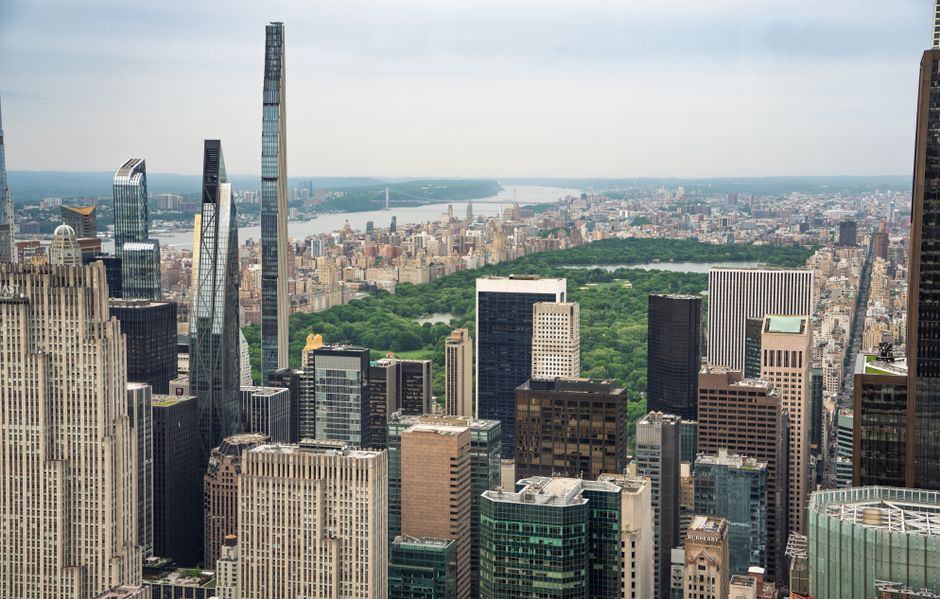
New York's Office Market Faces Perfect Storm of Headwinds in 2026
Rising vacancy rates, persistent hybrid work trends, and refinancing pressures are reshaping Manhattan's commercial real estate landscape.
Rising vacancy rates, persistent hybrid work trends, and refinancing pressures are reshaping Manhattan's commercial real estate landscape.

Manhattan's commercial property market is navigating treacherous waters this year, with office landlords confronting a constellation of challenges that show no signs of abating. Vacancy rates in Midtown Manhattan have climbed to 13.2 percent—the highest level since 2010—while asking rents have plateaued after years of steady growth, creating a sobering reality for property owners along Fifth Avenue, Park Avenue, and throughout the Financial District.
The persistence of hybrid and remote work arrangements continues to be the sector's most vexing headwind. Major financial services firms and technology companies occupy significantly less square footage per employee than they did pre-pandemic, fundamentally altering demand dynamics. Landlords that once commanded premium rents for trophy office space on Park Avenue South and in Hudson Yards are now offering substantial concessions: free rent periods stretching six months, furniture packages, and below-market rates just to attract tenants.
Refinancing pressures add another layer of complexity. Commercial real estate loans issued during the low-interest-rate era are reaching maturity, forcing owners to refinance at rates 200 to 300 basis points higher than their original terms. A Class A office building in Midtown East that carried a $200 million mortgage at 2.5 percent could face a refinancing cost nearly double the original debt service—a squeeze that forces difficult choices about property disposition or aggressive rent restructuring.
The challenge is particularly acute in secondary locations. While prime trophy assets in Rockefeller Center or along the Midtown Avenue corridor retain some appeal to institutional investors, B-and C-grade office buildings in outer Midtown and along the periphery of the Financial District are struggling. Conversion projects—transforming office space into residential or mixed-use properties—are accelerating, but the economics remain fraught with regulatory hurdles and capital requirements that deter many owners.
Corporate relocations compound the problem. Some mid-sized professional services firms and startups continue shifting operations to Westchester, New Jersey, or entirely remote models, reducing their Manhattan footprint. The return-to-office mandates that some firms implemented have proven less effective than anticipated, with employees negotiating flexible arrangements or departing for competitors offering greater flexibility.
Market observers expect continued pressure through at least 2027. Real estate investment trusts and institutional property owners are adjusting earnings forecasts downward, while construction lending has tightened considerably. For New York's commercial real estate sector—long a pillar of the city's economic resilience—this year represents a reckoning that may reshape the industry for years to come.
This article was compiled by AI from the sources linked above and screened before publishing. See our editorial standards.
How does this story make you feel?
Spread the word
About this article
Published by The Daily New York
Daily brief
Free, in your inbox before 7am. Weekdays.
More in Business