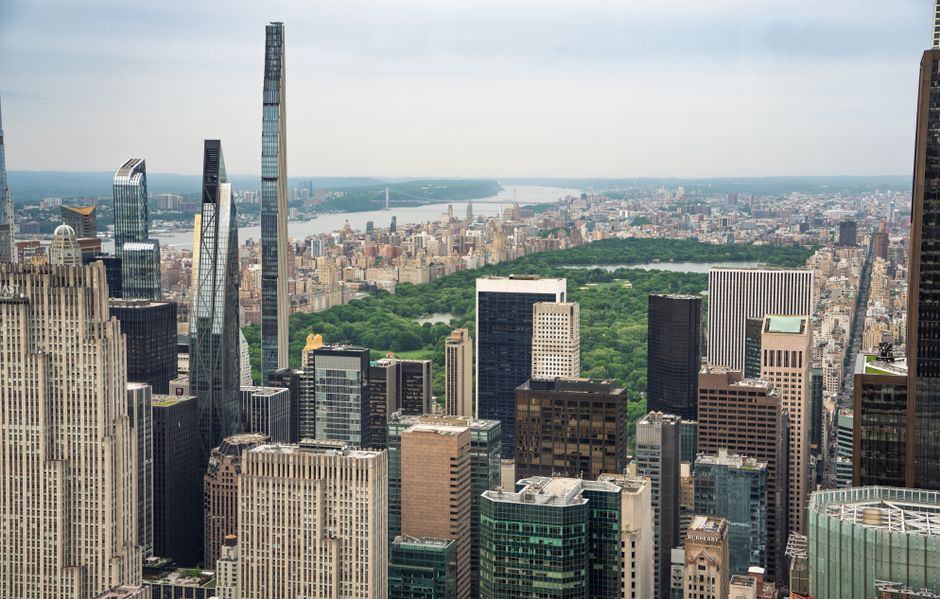
The Manhattan office market is in flux. Vacancy rates in Midtown hover near 20 percent, the highest in decades, while asking rents have softened across neighborhoods from Flatiron to Hudson Yards. Yet amid this turbulence, one Brooklyn-based property developer is seeing opportunity where others see risk.
Rebecca Chen, founder and CEO of Adaptive Spaces Real Estate, has spent the last eighteen months acquiring underperforming office buildings in secondary markets and converting them into flexible, short-term workspace solutions. Her flagship project, a 145,000-square-foot conversion on the border of Williamsburg and Greenpoint, recently achieved full occupancy—a feat that stands out in today's challenging leasing environment.
"The old model of long-term, all-or-nothing leases is dead," Chen explained during a recent site visit to her latest venture, a pre-war building on North 6th Street. "Companies want optionality. They want to test neighborhoods without committing to ten-year agreements."
Chen's timing reflects broader market dynamics. According to commercial real estate firm CBRE, Manhattan's office absorption fell sharply in the first half of 2026, with downtown neighborhoods particularly struggling as finance firms reduce headcount. Yet demand for flexible, month-to-month arrangements has grown 35 percent year-over-year, particularly among mid-sized tech companies and professional services firms relocating from expensive Midtown towers.
Her approach differs sharply from traditional landlord models. Rather than targeting Fortune 500 tenants seeking massive contiguous floors, Adaptive Spaces subdivides buildings into 2,000-to-8,000-square-foot units, complete with shared amenities, high-speed fiber, and climate control. Monthly rates range from $45 to $65 per square foot—below market average but above the margins of older Class-C properties.
The strategy appears to be working. Her first three projects, spanning Williamsburg, Long Island City, and Astoria, are collectively 94 percent leased, with a tenant retention rate exceeding 70 percent—unusual in flexible workspace markets where churn typically runs higher.
Yet challenges remain. Building codes, landlord financing, and navigating the byzantine approval process in different neighborhoods have slowed expansion plans. Chen's next target: aging office parks along the Grand Concourse in the Bronx, where acquisition costs are lower and institutional investors have largely abandoned.
"The Bronx office market is completely overlooked," she noted. "But with improved transit access and lower overhead, it's a natural landing zone for companies priced out of Manhattan. We're not just chasing trends—we're trying to democratize access to quality office space across the entire city."
This article was compiled by AI from the sources linked above and screened before publishing. See our editorial standards.