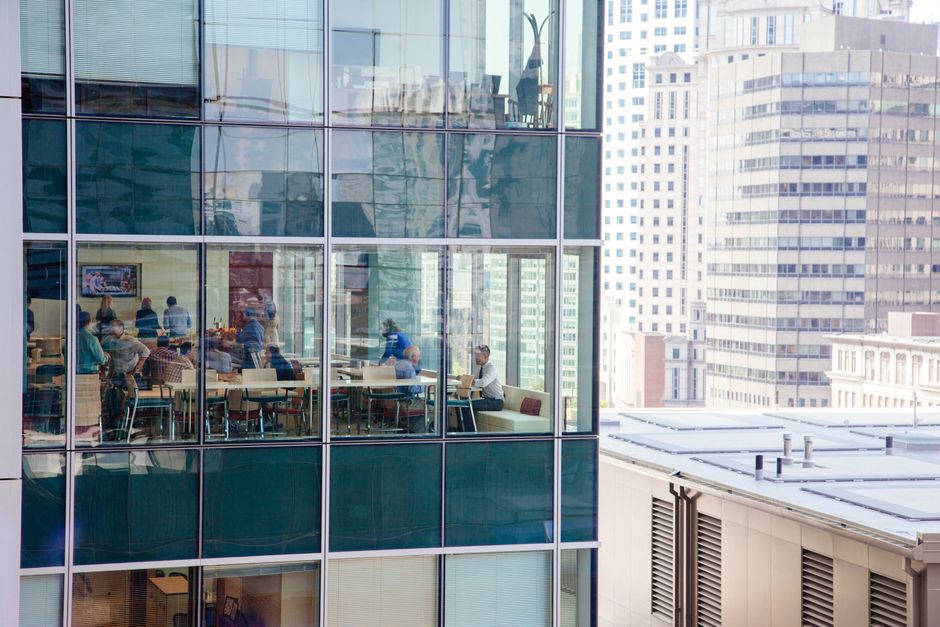
Foreign money is flooding back into Midtown Manhattan office towers this summer, drawn by geopolitical chaos that has made American commercial real estate look like a safe harbor again. The catch: the buildings are still largely empty.
The dynamic is creating a split-screen moment for New York's office market. Sovereign wealth funds and private investors from the Gulf states, Western Europe, and parts of Asia are acquiring or refinancing trophy assets along Park Avenue and in Hudson Yards at a pace not seen since 2019. Meanwhile, the physical demand for desk space remains stubbornly below pre-pandemic levels, leaving landlords caught between surging asset valuations and anaemic rent rolls.
The timing matters because several pressure points are hitting simultaneously. Iran's political transition following the death of Supreme Leader Khamenei is pushing cautious capital out of the Middle East and toward dollar-denominated assets. Europe is facing a brutal heatwave that killed more than 2,000 people in France alone during the last peak period, straining infrastructure and dampening business confidence in cities like Paris and Frankfurt. Russia's domestic economy is visibly deteriorating, with fuel shortages becoming a public spectacle. Investors sitting on cash in unstable jurisdictions tend to do the same thing: buy New York.
Capital Chases Safety While Tenants Chase Flexibility
The evidence is in the transaction data. Colliers International tracked $4.2 billion in Manhattan office asset sales during the first half of 2026, up roughly 30 percent from the same period last year. Much of that volume was concentrated in a handful of large deals: a recapitalisation of a tower on Sixth Avenue in the low 50s, and the partial sale of a Hudson Yards building to a Qatari-backed vehicle closed in late May. Asking rents for Class A space in Midtown are holding at around $105 per square foot annually — flat year-over-year — but the concession packages landlords are offering, including 18 to 24 months of free rent on long-term leases, tell a more honest story about underlying conditions.
Downtown Manhattan is seeing something different. The Financial District, where the conversion of older office stock to residential has accelerated under the city's Office Conversion Accelerator Program launched in 2023, is shedding roughly 4 million square feet of commercial inventory. That is compressing supply enough to tighten availability rates below 15 percent in some submarkets south of Fulton Street, even as Midtown hovers above 22 percent vacancy. The Real Estate Board of New York flagged this divergence in its June report, noting that the two markets are essentially running on separate tracks.
Law firms and financial services companies — the traditional anchors of Midtown leasing — have been signing shorter terms and taking less space per employee than in any comparable period on record. JPMorgan Chase's new headquarters at 270 Park Avenue, fully opened earlier this year, is the most visible exception: a bet on density and physical culture that most tenants are unwilling to replicate. Most deals getting done on Lexington Avenue and in the Plaza District right now run five to seven years, not the ten-to-fifteen year commitments that once gave landlords the confidence to carry large debt loads.
What Comes Next for New York Landlords and Their Tenants
The practical calculus for businesses renewing leases or evaluating new space in the second half of 2026 has shifted in tenants' favour, even if asking rents suggest otherwise. Brokers at CBRE and Cushman & Wakefield are both advising clients to push hard on build-out allowances and early termination rights, given that the concession environment is as generous as it has been in fifteen years.
For the owners, the global instability that is driving foreign capital into their buildings is a short-term cushion, not a structural fix. The deeper problem — that companies need fewer square feet per worker and more flexibility in how they commit — will not be resolved by Iranian succession politics or Russian fuel lines. Buildings along the 42nd Street corridor and in the Grand Central submarket that cannot attract tenants by 2027 will face hard conversations with lenders about refinancing terms on debt written at very different interest rate assumptions. The money is in the market. The occupiers, for now, are not.