New York Office Market 2026: What Every Business Needs to Know Right Now
Sublease space is tightening, trophy towers are commanding record rents, and the gap between Manhattan's winners and losers has never been wider.
Sublease space is tightening, trophy towers are commanding record rents, and the gap between Manhattan's winners and losers has never been wider.
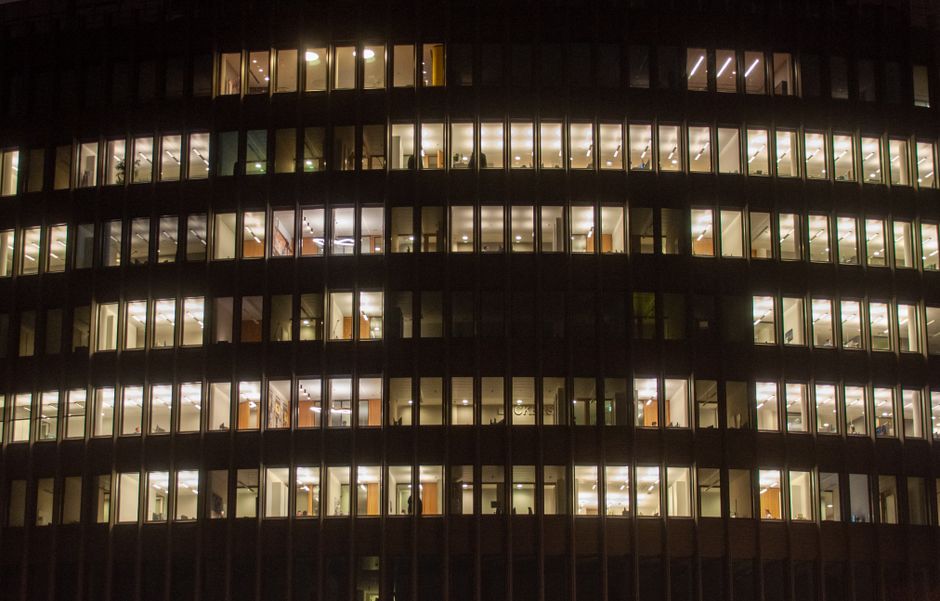
Manhattan's office market is splitting in two. Trophy-class towers in Midtown are posting near-full occupancy and pushing asking rents above $120 per square foot annually, while older Class B and C buildings below 34th Street are sitting at vacancy rates that brokers quietly describe as catastrophic. Any business signing or renewing a lease in the next six months is stepping into a market where the address on your lease agreement matters more than it has in a generation.
The timing matters because a wave of lease expirations is hitting simultaneously. Real estate services firm CBRE tracked roughly 18 million square feet of Manhattan office leases coming due between January and December 2026 — one of the heaviest rollover years since the post-pandemic restructuring began. Landlords with premium product are holding firm on pricing. Landlords with older stock are making concessions, including free rent periods stretching to 12 months and tenant improvement allowances topping $200 per square foot, just to keep buildings off the distressed list.
The clearest sign of the bifurcation is Hudson Yards on Manhattan's far West Side. Related Companies and Oxford Properties have kept occupancy at 30 Hudson Yards above 92 percent, according to filings reviewed this spring, with financial tenants paying top dollar rather than relocate to cheaper options. One Vanderbilt, the SL Green tower adjacent to Grand Central Terminal, tells a similar story — anchor tenants there signed long-term extensions in 2025 rather than test the market.
The picture is starkly different in the Financial District and parts of Midtown South. Buildings along William Street and Fulton Street are carrying double-digit vacancy, some above 20 percent, with sublease space compounding the pressure. The Real Estate Board of New York reported in its second-quarter survey that overall Manhattan availability hit 17.4 percent — a figure that sounds alarming until you strip out the older, functionally obsolete stock and realize the best buildings aren't moving that needle at all.
Brooklyn is carving its own path. Dumbo and the Brooklyn Navy Yard continue to absorb tech and creative tenants who want modern floor plates without Midtown prices. Asking rents in Dumbo are running $65 to $75 per square foot, roughly 40 percent below comparable Midtown space, and landlords there have seen smaller firms sign leases in the 5,000-to-10,000-square-foot range through the first half of 2026.
For any company with a lease expiring before mid-2027, the leverage question depends entirely on building class. Tenants in Class A towers should expect landlords to resist concessions — the demand is real and the inventory is thin. Tenants in Class B buildings, particularly those built before 1980 without significant capital upgrades, have negotiating room that hasn't existed in 15 years. Free rent, lower base rents, and landlord-funded buildouts are all on the table if tenants push.
The conversion trend is adding a layer of complexity. New York City's Office Conversion Accelerator Program, launched under the Adams administration and now extended through fiscal year 2027, has already green-lit conversion projects on at least eight Midtown and Lower Manhattan buildings. That means some of the sublease space that appears available on paper will eventually exit the office market entirely, tightening supply for tenants who wait too long hoping for further discounts.
Businesses should also pay attention to the transit calculus. Leasing brokers at Cushman & Wakefield have noted that tenant decision-making now weights proximity to the Second Avenue Subway line and the Long Island Rail Road concourse at Grand Central Madison more heavily than it did three years ago. That infrastructure shift is quietly pushing a premium onto blocks within a five-minute walk of both.
The bottom line for any CFO or operations director making real estate decisions this quarter: move quickly if you want the best Midtown product, move carefully if you're considering older stock and think you can extract more in negotiations, and do not assume that the overall vacancy headline tells you anything useful about the specific building you are about to sign 10 years of your company's life to.
How does this story make you feel?
Spread the word
About this article
Published by The Daily New York
Daily brief
Free, in your inbox before 7am. Weekdays.
More in Business