New York Art Galleries: From Manhattan to Five Boroughs
Explore how New York's gallery scene decentralized from Madison Avenue to Chelsea, Williamsburg, and beyond—democratizing access to contemporary art across all five boroughs.
Explore how New York's gallery scene decentralized from Madison Avenue to Chelsea, Williamsburg, and beyond—democratizing access to contemporary art across all five boroughs.
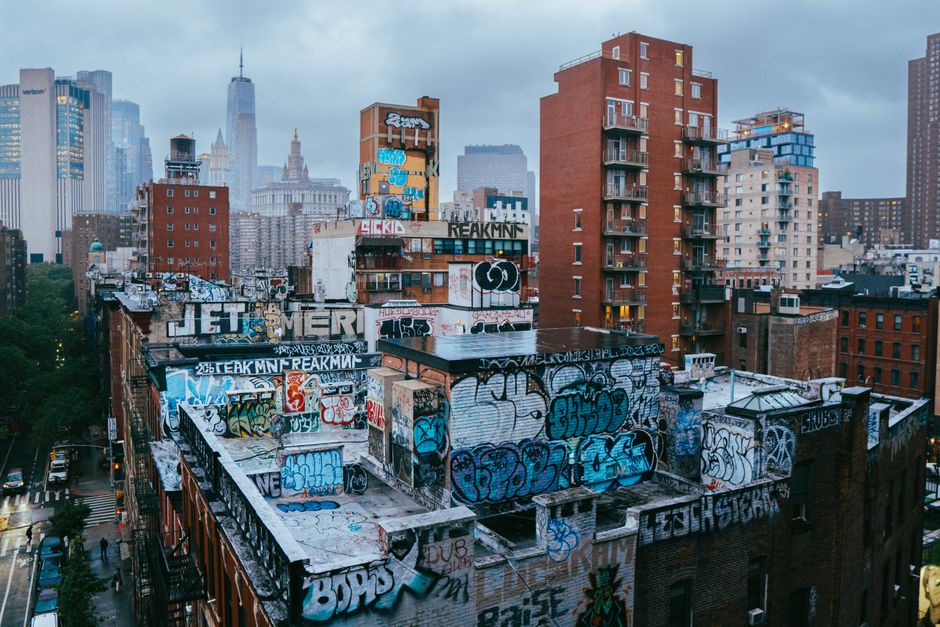
When Leo Castelli opened his Madison Avenue gallery in 1957, the art world had clear coordinates: a narrow corridor of wealth, taste-making, and gatekeeping that stretched from 57th Street to the Upper East Side. Sixty-nine years later, New York's gallery landscape bears almost no resemblance to that hierarchical model. Today, the city's art scene sprawls across Chelsea's converted manufacturing districts, Williamsburg's waterfront, the Lower East Side's immigrant neighborhoods, and emerging pockets in Astoria and Red Hook—a geographical and cultural revolution that fundamentally altered who gets to participate in art-making and collecting.
The 1970s and 80s marked the first seismic shift. As manufacturing declined, artists fleeing SoHo's rising rents colonized industrial spaces in Chelsea and the East Village, transforming neighborhoods into studio havens. By the 1990s, the Chelsea gallery corridor—stretching from West 20th to West 29th Street—had become the commercial epicenter, hosting over 300 galleries by peak concentration. But that dominance proved temporary. Rising commercial rents and a generation of artists skeptical of institutional prestige fractured the model.
The 2008 financial crisis accelerated what technology had already begun: decentralization. Galleries migrated to Williamsburg, Long Island City, and Bushwick, where lower overhead meant younger dealers could experiment with non-profit models and artist-run spaces. The Armory Show relocated from the Javits Center to the Hudson River waterfront in 2021, symbolizing a broader geographic repositioning. Meanwhile, institutions like the New Museum (launched 1977 in the East Village, relocated to Bowery in 2007) and the Whitney Museum's move to the High Line in 2015 signaled that prestige no longer required Madison Avenue proximity.
Today's data reflects this transformation. The Galleries Association of New York estimates over 800 galleries currently operate citywide—compared to roughly 1,200 at the 2007 peak, but distributed far more equitably. Average Chelsea gallery rent hovers around $12,000 monthly; comparable Williamsburg spaces lease for $4,000-6,000. First-generation gallery owners increasingly hail from immigrant and working-class backgrounds, reshaping institutional taste-making.
The shift hasn't erased inequality—emerging galleries still struggle with sustainability, and access to international art fairs remains concentrated among established dealers. Yet the diversification has created genuine alternatives. Artist collectives like Recess and Underline Projects operate on cooperative models. Galleries in Sunset Park and Jackson Heights now serve Caribbean, Latino, and Asian diaspora communities with work reflecting their own artistic traditions, not Manhattan's predetermined canons.
What was once a monolithic power structure has become genuinely plural—messier, more competitive, but finally reflecting the city it inhabits.
This article was compiled by AI from the sources linked above and screened before publishing. See our editorial standards.
How does this story make you feel?
Spread the word
About this article
Published by The Daily New York
Daily brief
Free, in your inbox before 7am. Weekdays.
More in culture