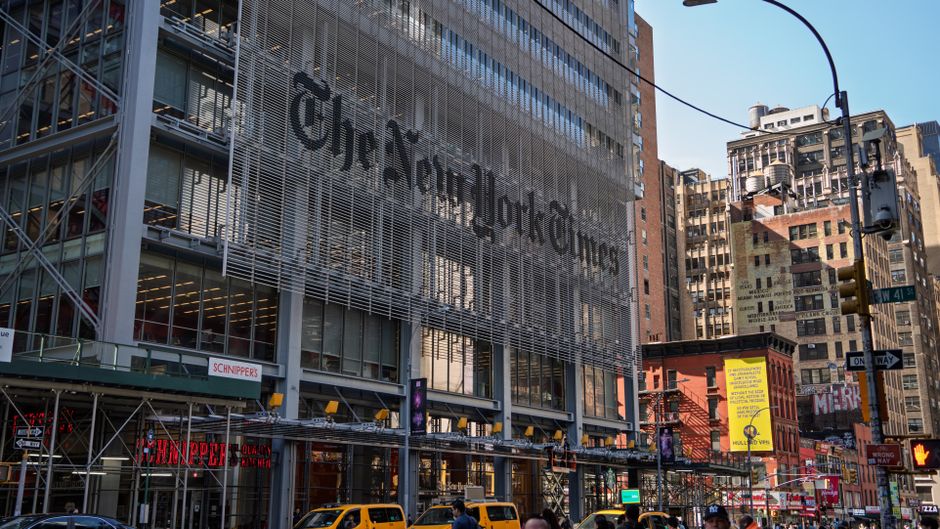
Wall Street closed Monday's session in two minds, a split verdict that had its roots in the European and Asian handover well before the opening bell rang on lower Broadway. The Nasdaq Composite bore the sharpest pain, falling 1.34 per cent to 25,815, as technology and growth stocks surrendered ground that had been hard-won across the first half of 2026. The S&P 500 eased 0.44 per cent to 7,440, while the Dow Jones Industrial Average, buoyed by its heavier weighting toward industrial and financial names, bucked the trend to close up 0.91 per cent at 52,182.
The divergence told a familiar story for seasoned market watchers: when risk appetite thins, money rotates out of high-multiple technology and into the perceived safety of value, defensives and hard assets. Gold underscored that dynamic emphatically, advancing 0.99 per cent to US$4,030 an ounce, a level that would have seemed extraordinary only a few years ago and that now commands the attention of every portfolio manager from Midtown to Mayfair.
The Global Handover Sets the Tone
Asian bourses set an edgy tone overnight, with major indices across Tokyo, Hong Kong and Sydney slipping under pressure from renewed concerns about the pace of global monetary easing and persistent uncertainty over United States trade policy. European markets echoed that caution; London, Frankfurt and Paris each retreated, and credit spreads in the eurozone widened modestly, a signal that institutional money was trimming exposure ahead of the half-year close on Tuesday. That reticence crossed the Atlantic intact, arriving on Wall Street as a preformed headwind.
For New York readers with 401(k) balances tilted toward index funds or Nasdaq-heavy growth allocations, the session served as a reminder that the first half of 2026 has not been uniformly rewarding. The mega-cap technology names that drove much of the rally in prior years have lately become the pressure point when sentiment shifts, and a 1.34 per cent single-day decline in the Nasdaq can move a diversified retirement account meaningfully when tech comprises the largest sector weight.
Crude oil offered little drama by comparison. WTI edged a fraction higher to US$70.38 a barrel, a level that keeps petrol prices contained and provides modest breathing room for transport and consumer-facing companies on the earnings outlook. Bitcoin, meanwhile, crept back above US$60,000, gaining 1.01 per cent to US$60,327, though the move attracted scepticism given the broader risk-off character of the session in equities.
With the half-year mark arriving Tuesday, fund managers face the mechanical reality of window dressing, the practice of adjusting reported holdings to reflect more flattering positions. That process can amplify moves in both directions and may generate additional volatility in the sessions ahead. The sturdiness of gold at four thousand dollars an ounce, combined with technology's fragility, suggests the market is entering the second half of 2026 with considerably less conviction than the bulls would prefer.
This article was compiled by AI from the sources linked above and screened before publishing. See our editorial standards.