Why New York Parents Raise Kids Differently Than the Rest of the World
From walk-to-school culture to hyperdiverse classrooms, the city offers a parenting model that's distinctly its own.
From walk-to-school culture to hyperdiverse classrooms, the city offers a parenting model that's distinctly its own.
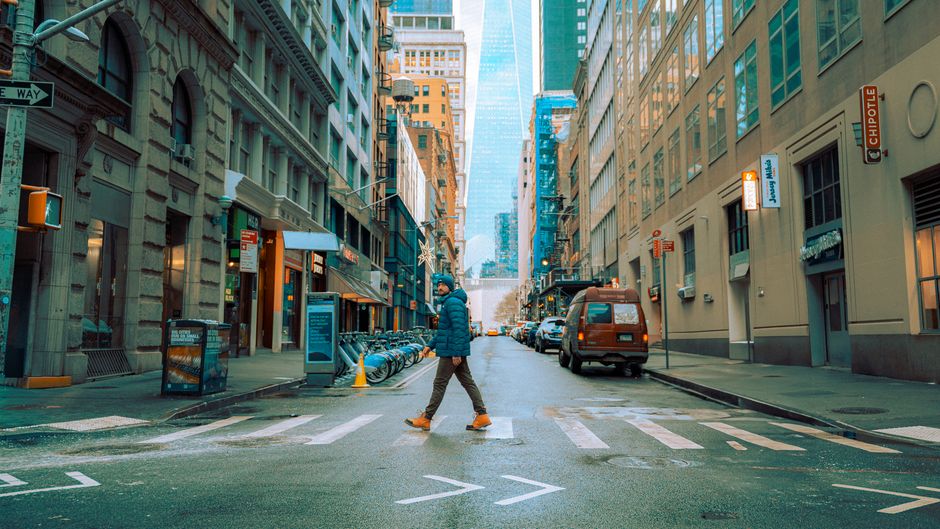
There's a particular kind of New York parent: the one who hands their eight-year-old a MetroCard and watches them board the subway alone, or who thinks nothing of their child navigating Washington Square Park unsupervised on a Saturday afternoon. This independence, granted earlier and more liberally than in most comparable global cities, reflects something fundamental about how parenting unfolds here.
"We're raising kids for an urban landscape, not a suburban one," explains the philosophy embedded in how New York families operate. Unlike London or Toronto, where car-dependent suburbs dominate the family demographic, or Singapore, where helicopter parenting culture runs particularly intense, New York parents operate from a different assumption: that competence and street-smarts are life skills to be cultivated early.
The city's public school system, serving 1.6 million students across 1,700 buildings, operates as an accidental equalizer in ways few other cities manage. A child in District 3 on the Upper West Side might share a classroom with kids from Harlem, Washington Heights, and Inwood—a diversity that no private school waiting list could replicate. That mixing happens almost nowhere else at scale. In most global cities, families self-segregate by school choice or location far more rigidly.
Then there's the economics of space. A Park Slope brownstone or a Williamsburg apartment demands different parenting than a suburban home with a backyard. Kids here learn to entertain themselves in 800 square feet. They become museum regulars by necessity—the American Museum of Natural History on the Upper West Side, the Met, MoMA—not luxury but geography. A weekend in Central Park or along the Hudson Greenway replaces the family backyard barbecue.
School costs tell their own story. Elite private schools like Dalton or Collegiate run $55,000 annually, yet many parents bet on the public system anyway, particularly in strong districts like District 2 or District 26 in Forest Hills, Queens. This isn't choice born of ideology alone but of real estate pragmatism: you buy into these neighborhoods for the schools, then you stay.
International families notice it immediately. Parents from Mumbai, Hong Kong, or Moscow remark on the informality—children calling teachers by first names at progressive schools like Bank Street or Little Red. The testing pressure exists (Gifted and Talented admissions remain brutally competitive), yet it coexists with an ethos of creative play and outdoor independence that would alarm many global equivalents.
What emerges is a parenting culture shaped by density, diversity, and limited personal space—one that prizes resilience and navigation skills over structured activity schedules. It's not better or worse than other models. But it's distinctly, irreducibly New York.
This article was compiled by AI from the sources linked above and screened before publishing. See our editorial standards.
How does this story make you feel?
Spread the word
About this article
Published by The Daily New York
Daily brief
Free, in your inbox before 7am. Weekdays.
More in lifestyle