How New York Got Here: The Long Road to Its 2026 Climate Reckoning
Decades of deferred action, a catastrophic storm, and a string of contested city policies have brought New York to a pivotal moment in its fight against climate change.
Decades of deferred action, a catastrophic storm, and a string of contested city policies have brought New York to a pivotal moment in its fight against climate change.
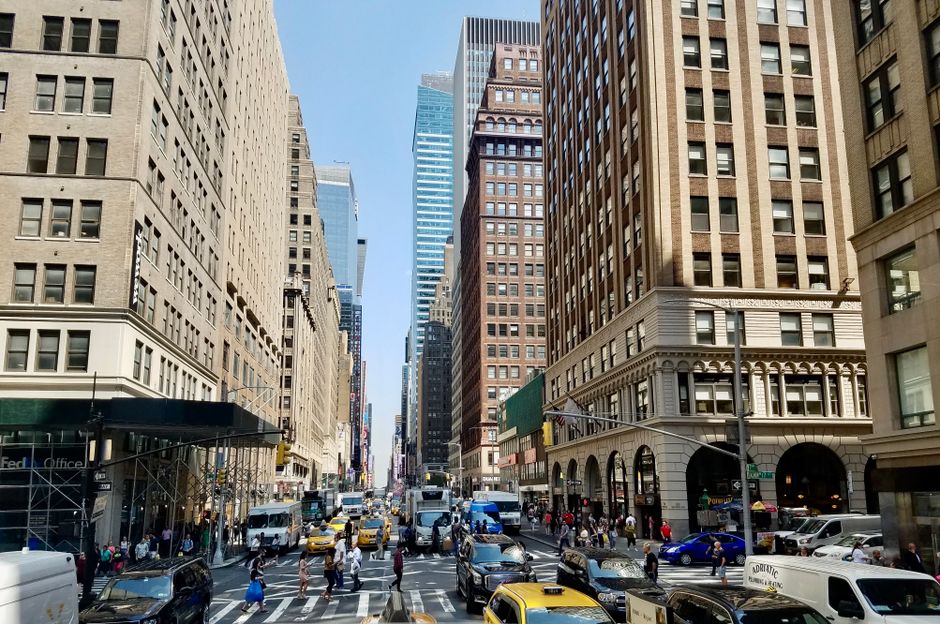
New York City enters the back half of 2026 carrying the weight of promises made and broken across three mayoral administrations, a federal infrastructure law that unlocked billions for coastal protection, and a summer that has already seen Central Park record its fifth consecutive day above 95 degrees Fahrenheit by June 28. The city's sustainability machinery — sprawling, expensive, and politically contentious — did not materialize overnight. It was assembled piece by piece, starting long before Eric Adams took office in January 2022.
The timing matters right now for a specific reason. France logged more than 2,000 excess deaths during its late-June heatwave. West African flooding has killed dozens. The climate signals arriving from overseas this week are the same signals New York's Office of Climate and Environmental Justice has been citing in internal briefings to the Adams administration all spring. City Hall is under pressure to show measurable progress before the FIFA World Cup kicks off at MetLife Stadium in August, when an estimated 1.5 million additional visitors will stress every system the city operates.
The honest accounting starts on October 29, 2012. Hurricane Sandy knocked out power to 800,000 Con Edison customers across the five boroughs, flooded the Rockaway Peninsula under six feet of water, and killed 43 New Yorkers. The storm caused roughly $19 billion in damage to the city alone. It forced a reckoning that neither Bloomberg's PlaNYC framework nor the Greener, Greater Buildings Plan — both launched before 2012 — had fully anticipated.
The federal response eventually came through the U.S. Army Corps of Engineers' East Side Coastal Resiliency project, a $1.45 billion initiative running from Montgomery Street in the Lower East Side up to 25th Street along the FDR Drive. Construction began in earnest in 2021 and is now roughly 60 percent complete, with flood barriers, park redesigns, and elevated esplanades reshaping a stretch of shoreline that Sandy turned into a disaster zone. That project became the template for how New York argues its climate spending to Washington — infrastructure first, green amenities second.
Meanwhile, Local Law 97, passed by the City Council in April 2019, set mandatory carbon limits on buildings larger than 25,000 square feet. The law covers roughly 50,000 buildings and was supposed to trigger a wave of retrofitting. The reality has been messier. Fines for non-compliance began accruing in January 2024 at up to $268 per ton of excess carbon dioxide, and the city's Department of Buildings has processed fewer than 4,000 compliance filings as of this spring. The Real Estate Board of New York lobbied hard to soften enforcement timelines. The Adams administration granted limited extensions to certain housing cooperatives and affordable housing providers in 2023, drawing criticism from environmental groups including the Natural Resources Defense Council's New York office on 40th Street.
Adams came into office promising a plant-based city — his personal dietary brand crossed over into municipal food policy, and Rikers Island's kitchens shifted to 70 percent plant-based meals by early 2023. Symbolically striking. Structurally limited. The harder work on building emissions, street tree canopy expansion, and green stormwater infrastructure in neighborhoods like Hunts Point and East New York has moved at a slower pace than the targets set under the city's 80x50 commitment, which calls for an 80 percent reduction in greenhouse gas emissions from 2005 levels by 2050.
The congestion pricing rollout — finally operational in its truncated form after years of legal and political delay — is now pulling in roughly $11 million per week and feeding the MTA's capital program, which includes electrification work on the Long Island Rail Road's Port Washington branch. That money connects directly to climate goals, even if it was sold primarily as a traffic and transit fix.
What comes next is a series of deadlines that cannot be extended. Local Law 97's steeper penalty thresholds kick in for the 2030 compliance period. The Army Corps project on the East Side is scheduled for completion in 2026. And the city's Climate Resiliency Design Guidelines, updated in March 2025, now require any new city-funded capital project above $10 million to account for 2080 sea level projections. Whether those guidelines survive contact with budget pressure is the question every sustainability advocate on Beaver Street to the Bronx is now watching.
How does this story make you feel?
Spread the word
About this article
Published by The Daily New York
Daily brief
Free, in your inbox before 7am. Weekdays.
More in News