New York's Duplicate Image Problem: The Numbers Behind a Growing Digital Headache
From city agency websites to MTA signage portals, redundant digital assets are costing New York real money and real time — and the data tells a clear story.
From city agency websites to MTA signage portals, redundant digital assets are costing New York real money and real time — and the data tells a clear story.
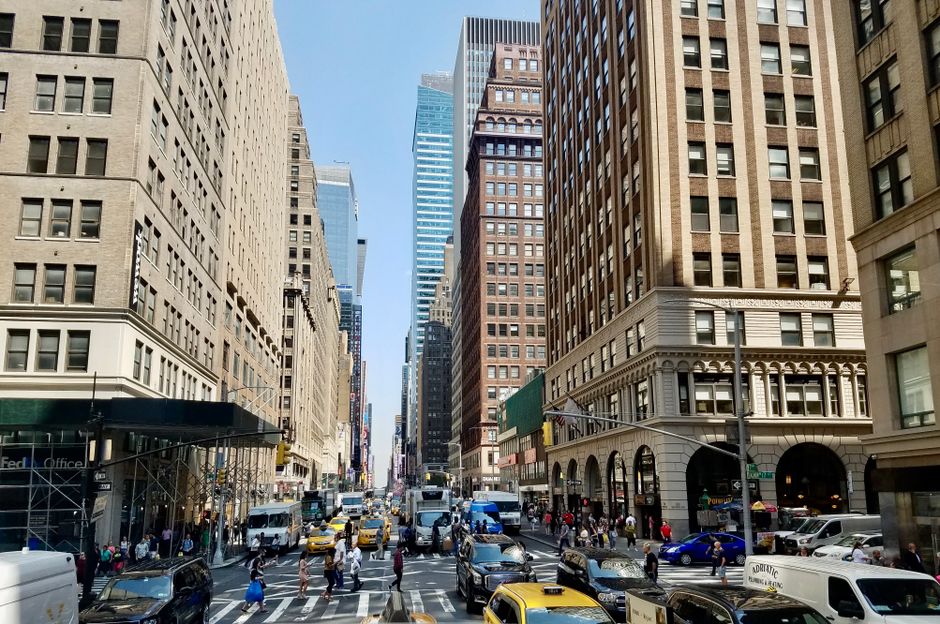
New York City's sprawling network of municipal websites, agency content portals, and public-facing digital databases holds an estimated tens of millions of image files — and a significant share of them are exact or near-exact duplicates. That redundancy is not a trivial housekeeping issue. It inflates storage costs, slows page-load times on sites millions of residents use daily, and complicates the kind of rapid content updates the city's communications offices depend on during emergencies.
The issue has sharpened in 2026 because of one specific pressure point: the FIFA World Cup. New York — specifically MetLife Stadium in East Rutherford and venues across the five boroughs — is hosting matches through mid-July, pushing city agency websites to their highest sustained traffic in years. The NYC Mayor's Office of Media and Entertainment and NYC Tourism + Conventions have both been racing to refresh digital assets since late 2025, and that sprint has exposed just how bloated the underlying content libraries had become.
Across large municipal content management systems, industry audits have consistently found that between 20 and 40 percent of stored image assets are duplicates or near-duplicates — files that differ only in file name, minor compression, or metadata timestamp. Apply even the conservative end of that range to a city the size of New York, and the implications are substantial. Cloud storage for large public-sector organizations routinely runs between $0.02 and $0.05 per gigabyte per month at enterprise rates; a library bloated by 30 percent redundancy across several terabytes adds up to thousands of dollars in wasted monthly spend before any labor costs are counted.
The MTA's digital properties offer a useful local case study, though not a perfect one. The agency's public-facing web infrastructure — covering subway maps, service alert pages, and the MyMTA app — underwent a major overhaul beginning in fiscal year 2024. Content managers working on that project noted internally that duplicate imagery in station photo banks and line-map graphics was a recurring friction point, slowing down update cycles at a time when the agency was simultaneously managing the rollout of congestion pricing communications and new countdown clock signage at stations including Grand Central Madison and the renovated Fulton Center complex in Lower Manhattan.
The NYC Department of City Planning, which maintains the publicly accessible ZolaMap tool and several neighborhood rezoning portals, faces a parallel challenge. Every time a rezoning study is published — Midtown South, Gowanus, and Industry City have all generated large documentation packages in recent years — associated image assets proliferate across internal drives, public-facing pages, and archived versions. Without automated deduplication tools, the same rendering of a proposed building envelope or a neighborhood streetscape photograph can exist in dozens of places simultaneously.
The practical consequences run deeper than storage bills. Search indexing suffers when duplicate images carry conflicting alt-text or metadata, degrading accessibility compliance under Section 508 standards that all federal-funding-dependent city agencies must meet. Page performance drops on mobile connections — a serious equity issue in neighborhoods like the South Bronx and East New York, where residents are more likely to access city services via smartphone rather than a home broadband connection. Google's Core Web Vitals metrics, which affect search ranking, penalize slow-loading pages directly.
The fix is not glamorous but it is well-defined. Automated perceptual hashing tools — software that generates a fingerprint for each image and flags matches regardless of file name — can process even large libraries in hours. Several vendors offer this as a managed service. The City of New York's Department of Information Technology and Telecommunications, known as DoITT, has the procurement infrastructure to evaluate and contract such tools. An initial audit of the highest-traffic city properties, prioritizing those handling World Cup visitor queries and housing application portals like NYC Housing Connect, would be a logical first step.
The data has long made the case. What's needed now is someone with the authority to act on it before the next content crunch hits — and in New York, there is always a next content crunch.
How does this story make you feel?
Spread the word
About this article
Published by The Daily New York
Daily brief
Free, in your inbox before 7am. Weekdays.
More in News