New York Leads the Pack on Fixing Duplicate Street Images — But Rivals Are Closing In
As cities worldwide scramble to clean up outdated and redundant imagery in public mapping systems, New York's approach is drawing both praise and scrutiny.
As cities worldwide scramble to clean up outdated and redundant imagery in public mapping systems, New York's approach is drawing both praise and scrutiny.
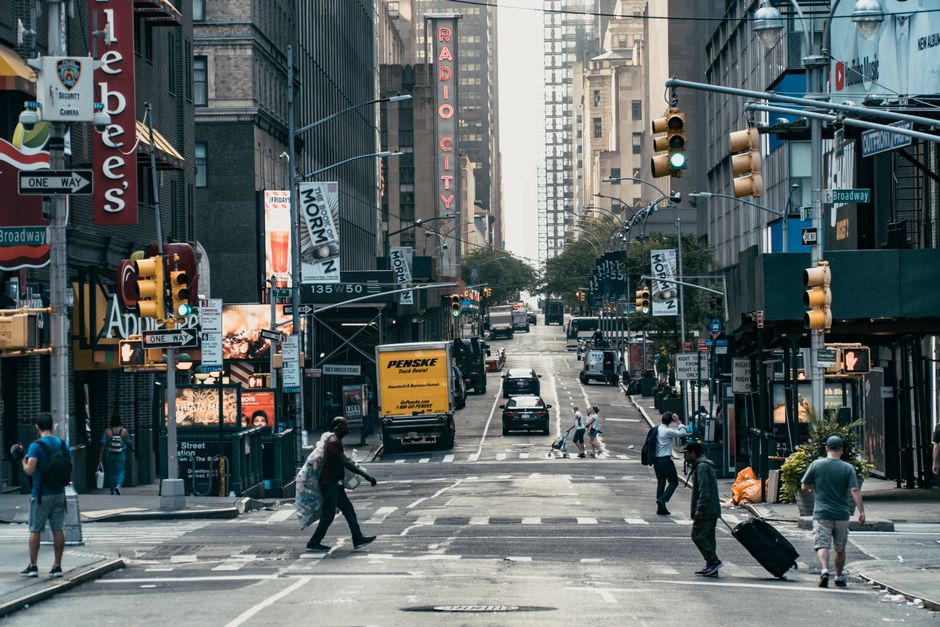
New York City's Department of Information Technology and Telecommunications quietly updated its open-data portal protocols in March 2026, introducing an automated flagging system designed to catch and remove duplicate georeferenced images from the city's publicly maintained street-level mapping database. The move affects tens of thousands of image assets covering everything from pothole documentation in the South Bronx to façade inspections along Atlantic Avenue in Brooklyn.
The timing matters. With the 2026 FIFA World Cup bringing an estimated 1.5 million visitors through New York between June and July, city agencies had a hard deadline to ensure that digital wayfinding tools and publicly accessible mapping interfaces reflected accurate, non-redundant visual data. Outdated or duplicated imagery — showing demolished buildings still standing, or construction sites rendered as empty lots — creates real problems for navigation apps, emergency dispatch, and infrastructure planning alike.
DoITT's new protocol, integrated with the city's existing 311 data infrastructure, uses perceptual hashing to compare street-level images flagged during the city's annual block-by-block survey. Images that score above a set similarity threshold are held in a review queue rather than published automatically. The system went live across all five boroughs on April 14, 2026.
London's Ordnance Survey and Tokyo's Geospatial Information Authority have both grappled with duplicate imagery problems in their respective national mapping frameworks, but neither city has deployed a real-time automated review queue at the municipal level. London's approach, as of early 2026, relies on periodic manual audits conducted by the Greater London Authority's data team — a process that, according to publicly available GLA documentation, runs on an 18-month cycle. Tokyo's system is more technically sophisticated in some respects, using AI-assisted classification, but it operates at the prefecture level rather than being embedded in day-to-day city service workflows.
Amsterdam and Berlin have both invested heavily in open urban data infrastructure, and Amsterdam's City Data team in particular has been cited in European Commission reports as a benchmark for metadata quality. But neither European city has tied its image deduplication workflow directly to citizen-facing service systems the way New York has done by integrating the protocol with 311.
In New York, the practical stakes are unusually high. The city maintains one of the largest municipal open-data repositories in the world, with more than 2,400 active datasets listed on NYC Open Data as of this spring. Street-level imagery feeds into at least a dozen downstream city tools, including the Department of Buildings' façade inspection platform — a system that became a higher priority after the 2023 Local Law 97 compliance cycle accelerated building audits across Midtown and Lower Manhattan.
The city's Citywide GIS unit, housed within DoITT and operating out of offices at 255 Greenwich Street, is now piloting a second phase of the project that would extend deduplication review to images submitted by third-party contractors — a category that includes survey firms hired under Department of Transportation capital contracts. That expansion is scheduled to begin in the fourth quarter of 2026.
Community groups in neighborhoods with rapid development cycles — Bushwick, Long Island City, and the Jerome Avenue corridor in the Bronx — have long complained that publicly available street imagery lags reality by years, compounding disputes over zoning, landmarks, and environmental review. The new automated system does not resolve existing backlogs, which DoITT has acknowledged in internal budget presentations obtained through Freedom of Information requests by several local civic tech organizations, including BetaNYC.
For residents and planners, the practical advice is straightforward: treat any city-sourced street image as potentially stale until the new flagging system has completed its first full review cycle, which DoITT has indicated will wrap up by December 2026. In the meantime, cross-referencing against the Department of Buildings' own record portal at 280 Broadway remains the most reliable method for confirming current conditions on any given block.
How does this story make you feel?
Spread the word
About this article
Published by The Daily New York
Daily brief
Free, in your inbox before 7am. Weekdays.
More in News