New York's Public Image Archives Are Ditching Duplicate Photos — Here's What Changed This Week
City agencies and cultural institutions accelerated efforts to clean up bloated digital libraries, with new tools and a July deadline driving the push.
City agencies and cultural institutions accelerated efforts to clean up bloated digital libraries, with new tools and a July deadline driving the push.
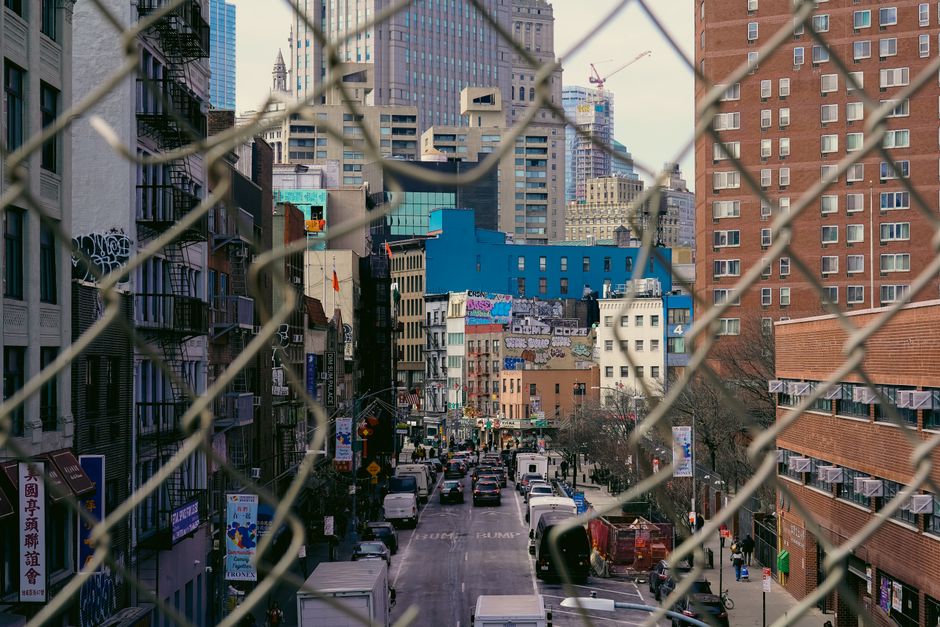
New York City's archival infrastructure got a quiet but significant upgrade this week, as several municipal agencies and cultural institutions crossed a self-imposed July 1 deadline to complete first-round audits of their digital image collections — a process aimed at eliminating duplicate photographs that have clogged servers, inflated storage costs, and muddied public records searches for years.
The push matters now because the city is under pressure from multiple directions. FIFA World Cup matches at MetLife Stadium in East Rutherford kick off later this month, drawing international media who rely on New York's public photo archives for historical and documentary images. At the same time, several city agencies have been migrating to centralized content management platforms since late 2025, exposing just how severe the duplication problem had become — in some cases, the same photograph existed in dozens of slightly different file sizes or naming conventions across a single department's servers.
The Department of City Planning and the NYC Municipal Archives, both of which maintain large photographic collections accessible to journalists and researchers, each confirmed they had completed initial duplicate-detection sweeps using hash-matching software — tools that compare image files at the pixel level rather than relying on file names alone. The Municipal Archives, located at 31 Chambers Street in lower Manhattan, houses more than 2.2 million photographs dating back to the nineteenth century. Administrators there have said publicly that storage demands on the collection have grown substantially as digitization efforts expanded after 2020.
The Brooklyn Public Library's Center for Brooklyn History, at 128 Pierrepont Street in Brooklyn Heights, also wrapped up a pilot program this week that it launched in March 2026 to test duplicate-removal workflows on its community photography collections. The library has not released final figures yet, but administrators indicated the pilot covered roughly 40,000 images from neighborhood documentation projects spanning the 1970s through the 2000s.
On the commercial side, several New York-based stock photography agencies and news organizations have been grappling with the same problem. Industry estimates — drawn from a February 2026 report by the Software & Information Industry Association — suggest that digital asset management inefficiencies cost media organizations an average of $18,000 annually per department in redundant storage and licensing administration. For large institutions with collections numbering in the millions, the figure scales dramatically.
Removing duplicate images is harder than it appears. A photograph taken at a 2003 City Hall press conference might exist as a high-resolution TIFF, a compressed JPEG, a web-optimized thumbnail, and a watermarked proof — technically four different files, but representing one image moment. Deciding which version to keep, which metadata to preserve, and how to handle attribution when files have passed through multiple systems over decades requires archival judgment, not just software.
The NYC Department of Records and Information Services has been working with vendors to establish a standardized protocol for this kind of tiered duplicate resolution, with a fuller policy expected before the end of the third quarter of 2026. That timeline is partly driven by a broader city records modernization initiative tied to Local Law 245, which set requirements for how agencies manage and retain digital records.
For journalists, researchers, and community organizations that regularly pull images from the city's public-facing portals, the practical upshot is a more reliable search experience — fewer dead links, cleaner metadata, and faster retrieval. The Municipal Archives portal at records.nyc.gov has already seen response times improve since the first round of cleanup began in April, according to information posted on the department's public project page.
Anyone who has submitted image requests through city channels in recent months and encountered stalled responses should resubmit. Several backlogged requests from the spring were caught in the audit freeze, and agencies are now processing them on a rolling basis. The Municipal Archives asks that researchers allow ten business days for responses through the remainder of July.
How does this story make you feel?
Spread the word
About this article
Published by The Daily New York
Daily brief
Free, in your inbox before 7am. Weekdays.
More in News