'My Photo Was Everywhere': New Yorkers Speak Out on the Spread of Stolen and Duplicated Images Online
From the Bronx to Brooklyn, residents say unauthorized copies of their photos are turning up across the internet — and they want answers.
From the Bronx to Brooklyn, residents say unauthorized copies of their photos are turning up across the internet — and they want answers.
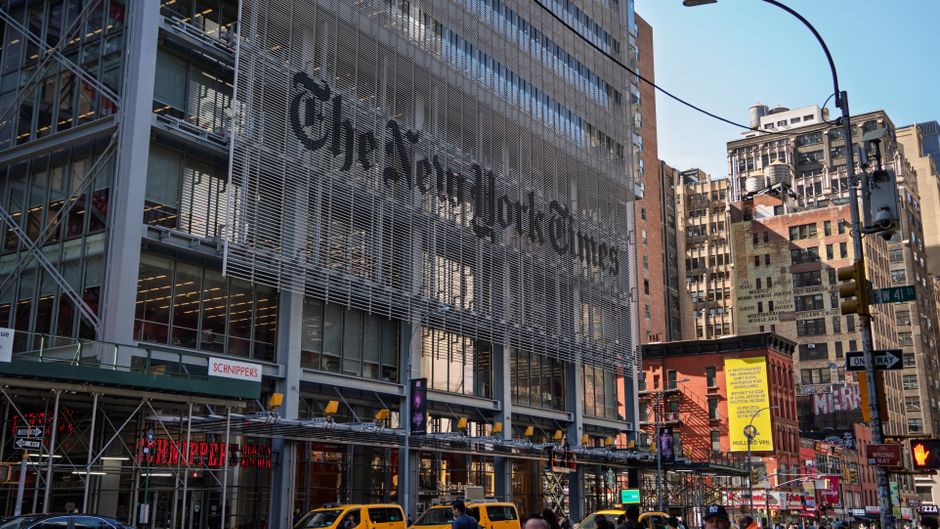
Marisol Reyes noticed something wrong in March. A photograph taken of her at a community garden event in Hunts Point, the Bronx, had shown up on at least four separate websites — none of which she had ever heard of, let alone authorized. The image had been cropped, recolored, and in one case used alongside text she found deeply offensive. She is not alone.
Across New York City this summer, a growing number of residents are raising alarms about what digital rights advocates describe as the runaway duplication of personal images online — photographs scraped from social media profiles, neighborhood Facebook groups, community organization pages, and local news outlets, then reposted without consent. The problem has drawn renewed attention partly because World Cup tourism has flooded the city with cameras and content creators since June, generating an enormous volume of new street-level imagery of ordinary New Yorkers who never agreed to be photographed for international distribution.
The complaints are concentrated in neighborhoods with dense social media communities and active local organizing scenes. Residents in Jackson Heights, Queens — where block associations and immigrant advocacy groups routinely post event photos — say they have repeatedly found images of community members appearing on unfamiliar third-party platforms. Staff at Make the Road New York, an immigrant rights organization with offices in Woodside, Queens, and Bushwick, Brooklyn, have been advising members on how to request image removals, according to information shared at a community meeting held in late June at their Woodside location on Roosevelt Avenue.
The issue cuts across demographics. In Crown Heights, Brooklyn, members of a tenant advocacy group that meets weekly at a community center on Eastern Parkway said they have seen photos from their public rallies stripped of context and reposted. In Washington Heights, a neighborhood where many residents maintain active ties to Dominican social media communities, several people described finding duplicated images of family members — including children — that had been lifted from semi-public Facebook posts and redistributed without credit or context.
Digital rights organization Electronic Frontier Foundation has documented what it describes as an acceleration in automated image scraping since 2024, driven by demand for training data for artificial intelligence systems. New York City's own Digital Services and Technology office has not yet released guidance specific to image duplication affecting private residents, though the city did launch a broader AI accountability framework in early 2025 under Local Law 144.
For people who discover their images have been duplicated and spread without consent, the practical options remain limited and often frustrating. Filing a Digital Millennium Copyright Act takedown notice — the primary federal tool available — requires the person whose image appears to either own the copyright themselves or act through an attorney. For photographs taken by a professional or a third party at a public event, that copyright typically belongs to the photographer, not the subject.
The New York Civil Liberties Union has pointed to New York Civil Rights Law Sections 50 and 51, which prohibit the commercial use of a person's name, portrait, or picture without written consent. Those statutes, originally passed in 1903 and amended over the decades, do not cover non-commercial uses — a loophole that leaves many victims without a clear legal path.
Community tech education programs are trying to fill the gap. The Brooklyn Public Library's Tech Help program, offered at branches including Central Library on Grand Army Plaza and the Flatbush branch on Linden Boulevard, holds free drop-in sessions where librarians walk residents through platform-specific image removal request processes for Instagram, Facebook, and Google Images.
Advocates say the most effective immediate step is to set personal social media accounts to private and to use reverse image search tools — Google Lens or TinEye — to locate copies of photos that may already be circulating. For those whose images have been used commercially, consulting a civil rights attorney remains the clearest route to potential redress. Several law clinics at Brooklyn Law School and CUNY School of Law offer free consultations for qualifying residents.
The city council's Committee on Technology has not scheduled a hearing on image duplication as of July 4, but several members have said publicly they are monitoring the issue as AI-driven content tools become more widely available to bad actors.
How does this story make you feel?
Spread the word
About this article
Published by The Daily New York
Daily brief
Free, in your inbox before 7am. Weekdays.
More in News