New York's Duplicate Image Problem: How the City Stacks Up Against London, Tokyo and Amsterdam
As cities worldwide race to purge redundant and outdated visual content from public-facing systems, New York is learning some hard lessons from abroad.
As cities worldwide race to purge redundant and outdated visual content from public-facing systems, New York is learning some hard lessons from abroad.
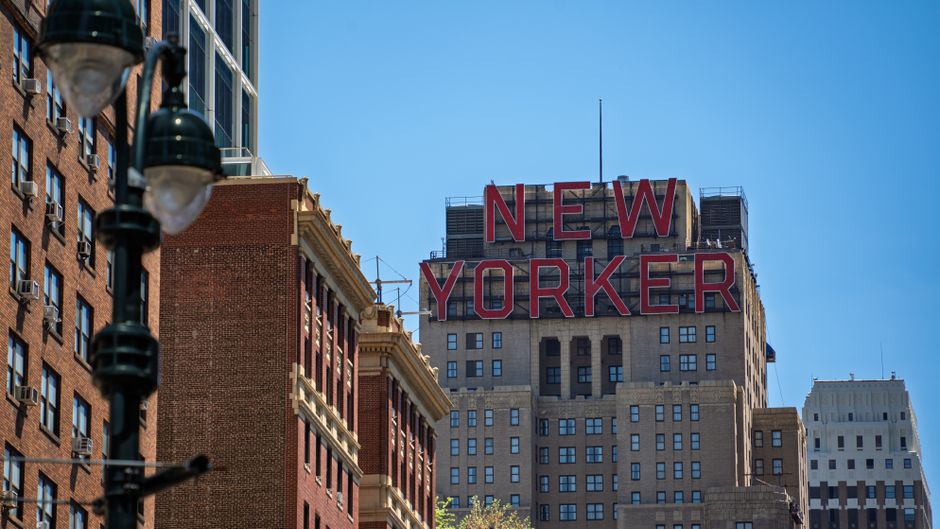
New York City's sprawling network of public digital infrastructure — from the 472 LinkNYC kiosks lining Midtown sidewalks to the MTA's passenger information displays across 472 subway stations — is quietly grappling with a problem that costs municipalities millions annually: duplicate imagery embedded in everything from permit portals to emergency broadcast systems. The city's Department of Information Technology and Telecommunications, known as DoITT, confirmed it has been running an internal audit since January 2026 to identify and replace redundant visual assets across more than 30 city-managed digital platforms.
The timing matters. With an estimated 100,000 visitors descending on the five boroughs for the 2026 FIFA World Cup matches hosted at MetLife Stadium this summer, city agencies have faced urgent pressure to ensure that public-facing wayfinding systems, website portals, and digital signage are accurate, consistent, and free of the kind of visual clutter that erodes trust and causes confusion. Outdated subway map images appearing on city tourism pages, or duplicated emergency-exit diagrams posted across inconsistent formats at Penn Station and Grand Central Terminal, are not abstract concerns — they are active liabilities during a high-traffic event year.
London's Transport for London agency completed a comparable audit of its Journey Planner platform in 2024, eliminating more than 14,000 duplicate image files and reducing page-load times by roughly 22 percent, according to TfL's published digital transformation report. Amsterdam's city government, through its Digitale Stad initiative, adopted a centralized digital asset management system in 2023 that now governs imagery across all municipal departments, cutting redundancy costs by an estimated €1.2 million in its first operational year. Tokyo's Metropolitan Government has gone further still, mandating since April 2025 that all ward-level offices submit visual assets through a single cloud repository before any public-facing deployment.
New York has no equivalent mandate yet. The city's 2026 Open Data Plan, published by DoITT in March, references image-asset standardization as a goal but sets no binding compliance deadline for individual agencies. That means the Department of City Planning, the Parks Department, and the Mayor's Office of Immigrant Affairs — each of which maintains independent content management systems — are effectively operating on their own timelines. The Brooklyn Public Library and the Queens Public Library, both of which run separate digital branch portals under city funding agreements, have each flagged duplicate image inventory as a known backlog issue in internal planning documents reviewed by city oversight staff.
The MTA began a targeted digital asset review for its customer-facing web properties in February 2026, focused initially on the 14 lines depicted in station signage across the A Division — the numbered subway lines. The agency's Capital Program office has allocated resources under the 2020–2024 Capital Plan, a $54.8 billion framework, to modernize digital passenger information infrastructure, though image deduplication specifically falls under a smaller operational budget line rather than capital expenditure.
At the street level, the LinkNYC kiosks managed by Intersection Co. under a city franchise agreement push localized maps and event imagery that, until a 2025 content refresh, carried duplicated borough-specific images across kiosks in neighborhoods as distinct as Sunset Park in Brooklyn and Fordham Road in the Bronx. Intersection updated its content delivery protocol in November 2025, consolidating image libraries under a new asset taxonomy — a move that city officials have pointed to as a model for other franchise operators.
For residents and businesses interacting with city digital services, the practical upshot is straightforward: portals like NYC.gov and the city's 311 service app are mid-audit, and users may still encounter inconsistent or repeated imagery in search results and PDF downloads through at least the end of the third quarter of 2026. DoITT has said it expects to publish a consolidated asset management framework by October 2026. Cities that have already standardized — London and Amsterdam chief among them — offer a clear roadmap. New York's challenge, as ever, is getting dozens of semi-autonomous agencies to follow it.
How does this story make you feel?
Spread the word
About this article
Published by The Daily New York
Daily brief
Free, in your inbox before 7am. Weekdays.
More in News