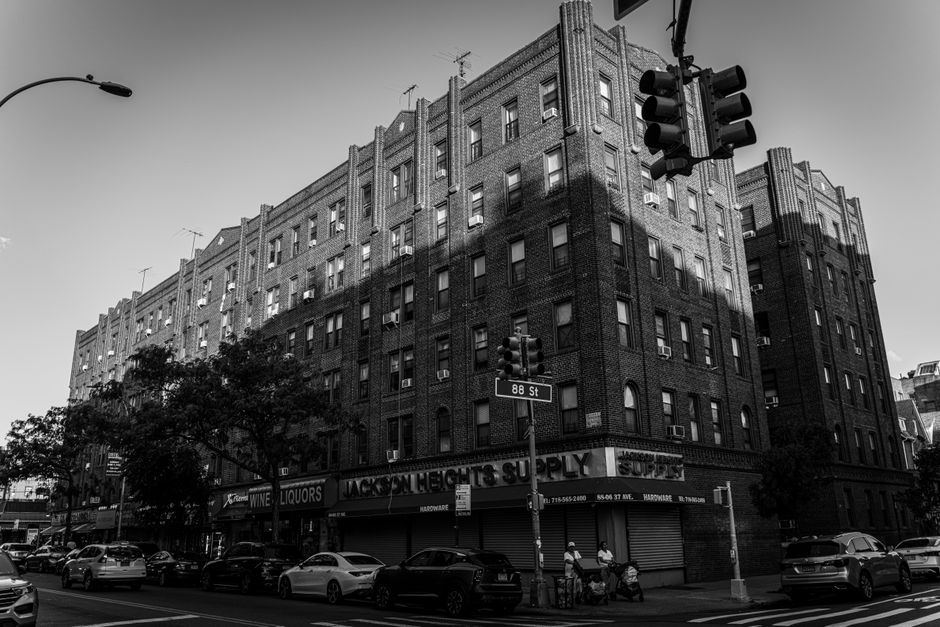
For years, Brooklyn commanded the city's investment spotlight. But as Manhattan penthouses drift further beyond reach and prime Brooklyn brownstones command eight-figure price tags, a quieter transformation has been unfolding across the East River. Astoria, Queens—long a neighbourhood of solid value and tight-knit communities—has emerged as 2026's most compelling investment opportunity in the outer boroughs, with price appreciation and new development momentum that rival Brooklyn's trajectory from a decade ago.
The numbers tell the story. Over the past eighteen months, median home prices in Astoria have climbed roughly 18 percent, reaching approximately $875,000 for a two-bedroom apartment—still below the city median of $800,000 for single-family homes, yet rising faster than comparable neighbourhoods in Williamsburg or Park Slope. New development along the waterfront, particularly around Astoria Cove and the Long Island City boundary, has attracted both institutional capital and owner-occupants seeking space without the premium attached to Manhattan or established Brooklyn addresses.
What's driving Astoria's moment? Transit access remains foundational. The N and W subway lines provide direct connectivity to Midtown, while the Long Island Rail Road's pending East Side Access expansion promises further linkage. But infrastructure alone doesn't explain the surge. The neighbourhood's cultural infrastructure—the Museum of the Moving Image, Kaufman Astoria Studios, a booming restaurant scene centred on Ditmars Boulevard and 30th Avenue—has matured considerably, attracting younger professionals and families seeking authenticity over artifice.
Waterfront rezoning has been transformative. Previously industrial stretches along the East River now feature mixed-use developments with residential, retail, and office components. The conversion of former manufacturing spaces into loft-style apartments has particularly appealed to remote workers and creative professionals priced out of Manhattan and Williamsburg.
Yet this ascent carries caveats. Much of Astoria's inventory remains relatively modest—studios and one-bedrooms dominate new development. Schools, while improving, still lag Manhattan and certain Brooklyn districts. And as investment capital flows in, affordability pressures mount for long-term residents, prompting conversations about preservation and community stability.
For investors and owner-occupants, however, the calculus is straightforward: Astoria offers the combination of proximity, cultural vitality, and appreciation potential that defined Brooklyn's 2010s boom—at prices that still reflect relative value. Whether that window remains open depends on how quickly the market prices in what locals have quietly known for years: Queens' waterfront is no longer the city's best-kept secret.
This article was compiled by AI from the sources linked above and screened before publishing. See our editorial standards.