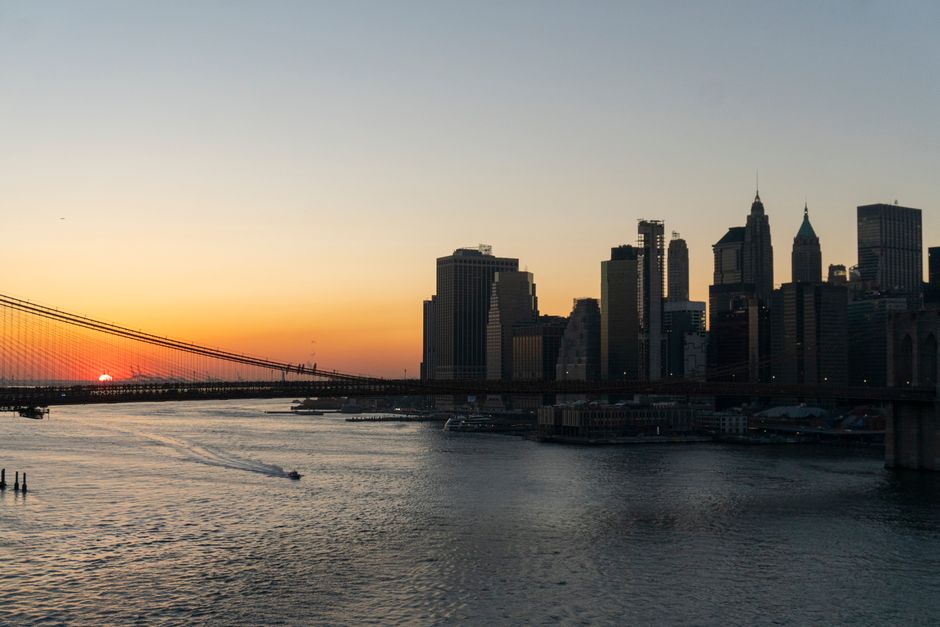
Walk through the Williamsburg waterfront these days and you'll spot the telltale signs: rooftop solar arrays multiplying across industrial lofts, electric vehicle charging stations sprouting along Kent Avenue, and startup founders hunched over laptops in co-working spaces debating battery storage margins over $7 oat milk lattes.
New York's clean energy startup scene is experiencing a genuine inflection point. The city's commitment to reaching net-zero emissions by 2050—and cutting greenhouse gas emissions 85 percent by 2040—has created an unusual alignment: regulatory pressure, substantial venture funding, and a skilled talent pool concentrated in a five-mile radius. By some measures, climate tech funding in the tri-state region reached $3.2 billion in 2025, up 40 percent from the prior year.
The momentum is visible in specific pockets. The Greentech@NYU Innovation Hub in Brooklyn has incubated over two dozen companies since its 2023 launch, focusing on grid modernization and waste reduction. Meanwhile, Plug and Play's New York office—nestled near Washington Square Park—has dedicated an entire cohort to energy efficiency software, attracting founders from as far as Copenhagen and Singapore.
What's driving this isn't just idealism. The numbers matter. New York City's aging electrical infrastructure, burdened by a summer peak demand that regularly strains Con Edison's system, represents a $30 billion modernization opportunity. Buildings account for roughly 70 percent of the city's carbon emissions, according to the city's own sustainability targets. For startups, that's not a problem—it's a market.
Companies tackling district heating systems, smart grid analytics, and materials science for carbon capture have begun raising serious Series A rounds. One emerging focus: retrofitting the brownstones and pre-war apartment buildings that define neighborhoods like Park Slope and the Upper West Side. The regulatory environment helps—New York's building performance standards now legally require emissions reductions, creating hard deadlines that force adoption.
The talent pipeline matters too. Columbia University's Fu Foundation School of Engineering and NYU's Tandon School pump out graduates trained in electrical engineering and sustainable systems design. The proximity to major utilities, municipal agencies, and corporate sustainability officers creates natural customers within walking distance.
It's not without friction. Real estate costs remain punishing—startup office space in DUMBO or the Flatiron District hovers around $80 per square foot annually. Permitting timelines can stretch regulatory advantage into regulatory paralysis. Yet founders keep coming, betting that solving New York's energy puzzle positions them to tackle San Francisco's, Boston's, and eventually, the world's.
This article was compiled by AI from the sources linked above and screened before publishing. See our editorial standards.