Running New York's Best Trails: Evidence-Based Tips That Actually Work for Local Conditions
From humidity management to pavement impact, here's what the science says about training safely on the city's most popular routes.
From humidity management to pavement impact, here's what the science says about training safely on the city's most popular routes.
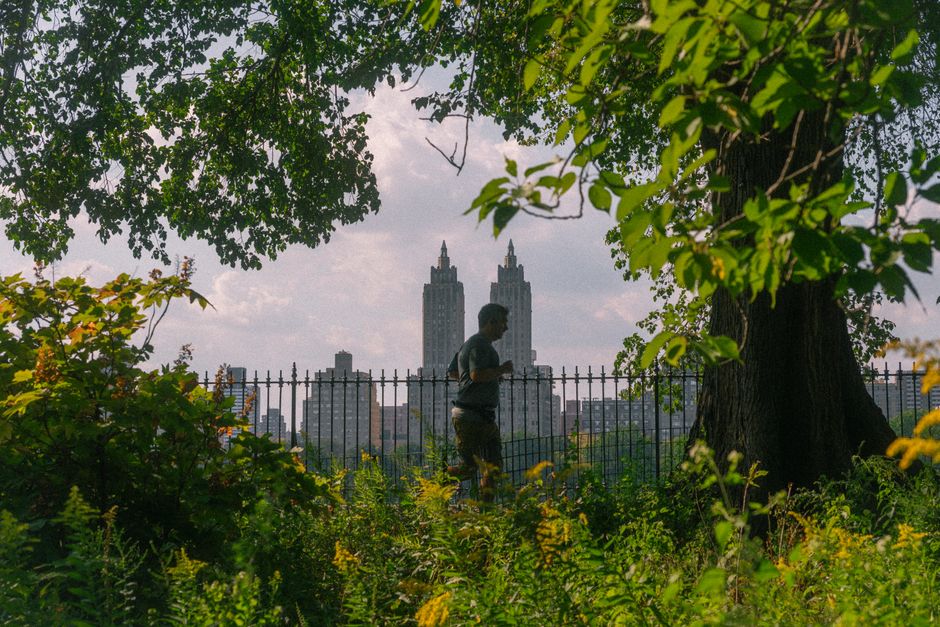
New York runners face a unique set of environmental challenges. The humidity that settles over Central Park in summer can spike core temperatures by 2–3 degrees Fahrenheit compared to dry conditions. The uneven concrete of Manhattan's streets creates impact forces up to 40% higher than asphalt. And the city's distinctive topography—from the gentle hills of Riverside Park to the exposed elevation at Morningside Heights—demands strategic conditioning.
Research supports what local runners know intuitively: tailoring your approach to New York's specific conditions matters more than simply logging miles.
Start with humidity management. Central Park's 843 acres trap moisture, particularly near the Reservoir and around the Ramble. Studies show that running in humidity above 70% reduces sweat evaporation efficiency by nearly half. Solution: run early morning loops—say, the 6.1-mile Outer Loop—before 8 a.m., when humidity typically peaks four to six hours later. Hydration stations at Bethesda Terrace and the Boathouse should be part of your route planning, not an afterthought.
Choose surfaces strategically. The Hudson River Greenway, which stretches 11 miles from Battery Park to the George Washington Bridge, offers a predominantly asphalt surface with less joint stress than city streets. A 2023 study in the Journal of Sports Sciences found that runners on asphalt experienced 15% less tibial impact than those on concrete. The protected bike lanes expanding along the West Side Highway now provide dedicated running space—use them.
Account for elevation strategically. Morningside Heights (around Columbia University) and the climb from the East River toward the Upper West Side create metabolic demands that flat park routes don't. Incorporating these hills once weekly, rather than daily, allows for adaptation without overuse injury, according to exercise physiology research. Save flat routes like the Central Park loop for recovery days.
Adjust gear for urban conditions. Reflective visibility matters. New York's 24-hour activity means predawn and evening runs are common; the Centers for Disease Control notes that visibility gear reduces evening accident risk by 56%. Moisture-wicking layers handle the city's temperature swings—it's not uncommon for morning temps to be 15 degrees cooler than midday.
Local running clubs like the New York Road Runners and smaller neighborhood groups often share data about trail conditions, seasonal hazards, and maintenance schedules. Their collective knowledge—which routes flood during heavy rain, where ice forms earliest in winter—reflects the kind of hyper-local intelligence that data alone cannot capture.
The best running program isn't the one your friend swears by in Colorado. It's the one built for Central Park's microclimate, Manhattan's pavement, and your own recovery capacity in a city that never quite cools down.
This article was compiled by AI from the sources linked above and screened before publishing. See our editorial standards.
How does this story make you feel?
Spread the word
About this article
Published by The Daily New York
Daily brief
Free, in your inbox before 7am. Weekdays.
More in Wellness