Why New York's Commute Is Like No Other City on Earth
From the subway's democratic chaos to the surprising affordability of transit, New York has cracked a code that London, Tokyo, and Paris are still trying to solve.
From the subway's democratic chaos to the surprising affordability of transit, New York has cracked a code that London, Tokyo, and Paris are still trying to solve.

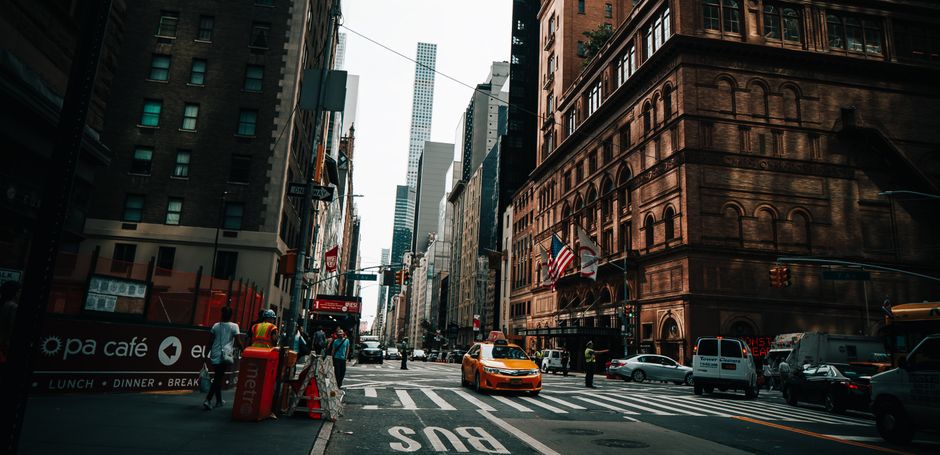
Walk into Grand Central Terminal on a Monday morning and you'll witness something almost impossible to replicate elsewhere: a functioning mass-transit system that moves 5.5 million people daily without requiring them to be wealthy. That's the real New York story—not the glittering penthouses of the Upper East Side, but the 55 percent of commuters who rely on the Metropolitan Transportation Authority's subway, buses, and commuter rails to survive this city.
A monthly MetroCard costs $33 for unlimited rides. Compare that to London's Oyster Card ($165 monthly for zones 1-2), Tokyo's Suica system ($50-80 for limited daily passes), or Paris's Navigo ($85 for Île-de-France coverage). New York's subsidized fares mean a nurse in the Bronx, a construction worker in Queens, and a finance analyst in Manhattan all pay the same price to cross the city. It's remarkably egalitarian for a place defined by inequality.
But affordability masks a darker reality. The subway system is 120 years old, and it shows. Delays plague the F train on 14th Street, the L line across Williamsburg sits perpetually on edge, and the 6 express frequently crawls through the Bronx. Yet New Yorkers have adapted in ways tourists find bewildering. We've internalized MTA reliability the way a sailor reads weather patterns—with learned fatalism and backup plans.
What truly separates New York is the hybrid ecosystem. Nowhere else allows seamless pivoting between modes. Run late for your 9 a.m. at the Chrysler Building? The subway is your safety net. Weekend exploring Prospect Park in Brooklyn? A Citi Bike gets you there for $3.50. Heading to JFK for a red-eye? The AirTrain actually works, unlike most airport connections globally. This interwoven infrastructure—imperfect as it is—creates a mobility landscape unmatched by peers.
Paris's RATP is cleaner. Singapore's MRT is more efficient. But neither city permits the kind of spontaneous, car-free living that defines New York. You can raise a family without owning a vehicle. You can move from Astoria to the East Village without learning to drive. In suburban-dependent cities like Los Angeles or even sprawling metros like Berlin, this remains fantasy.
The MTA's $19 billion capital plan for 2025-2029 signals change ahead—real improvements to infrastructure that aging cities rarely achieve. Yes, the commute can be maddening. But that very maddening quality—the friction, the compromise, the democratic scramble—is precisely what makes New York's transportation system irreplaceable. It's not smooth. It's human. And in a globalized world of algorithmic optimization, that matters more than efficiency ever could.
This article was compiled by AI from the sources linked above and screened before publishing. See our editorial standards.
How does this story make you feel?
Spread the word
About this article
Published by The Daily New York
Daily brief
Free, in your inbox before 7am. Weekdays.
More in lifestyle