Why New York's Neighbourhoods Stand Apart: A Global City Comparison
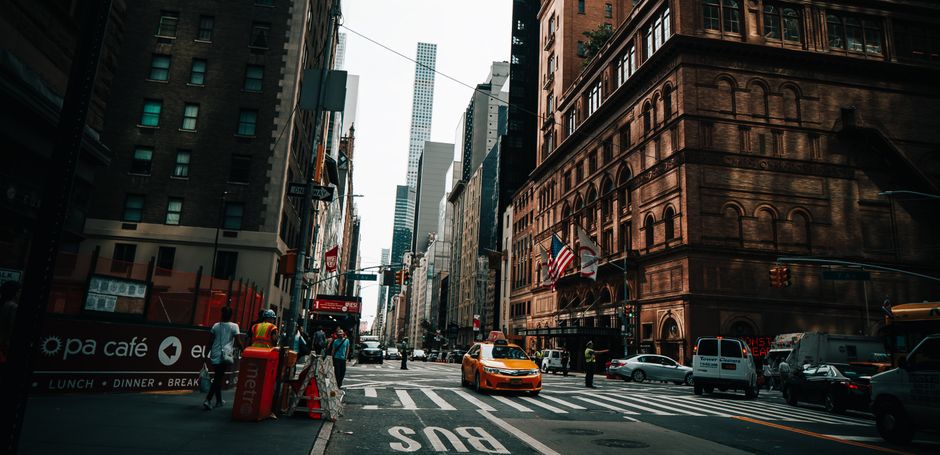
From the vertical density of Manhattan to the street-level culture of Queens, New York offers a fundamentally different urban living experience than any other global metropolis.
From the vertical density of Manhattan to the street-level culture of Queens, New York offers a fundamentally different urban living experience than any other global metropolis.
Walk through the East Village on a Tuesday evening and you'll witness something rare in global cities: neighbourhoods that operate as genuine, mixed-income communities rather than segregated economic zones. This is what separates New York from London's rigid postcodes, Singapore's planned districts, or Tokyo's wealth-stratified wards. Here, a rent-controlled brownstone on East 3rd Street sits beside a $4 million penthouse, and that friction—that democratic messiness—defines the city's character.
The numbers tell part of the story. According to the latest Census data, Manhattan's population density exceeds 70,000 people per square mile, yet the average New Yorker spends just 32 minutes commuting. Compare that to London's sprawling commuter belts or Paris's banlieues, where many workers face 90-minute journeys. The subway system, for all its flaws, enables unprecedented neighbourhood accessibility. You can live in Astoria, Queens—where a one-bedroom averages $2,100 monthly—and work in Murray Hill in 25 minutes. That option simply doesn't exist in most world cities at comparable price points.
What truly distinguishes New York's neighbourhoods is cultural porosity. Sunset Park in Brooklyn hosts the largest Scandinavian community outside Scandinavia, while Flushing, Queens remains the most diverse neighbourhood on Earth, with over 130 languages spoken. This isn't tokenistic diversity; it's lived, messy, multi-generational integration. Compare that to the often-ghettoized immigrant quarters of Paris or the compartmentalized ethnic enclaves of other cities.
The street-level economy reinforces this uniqueness. Unlike Hong Kong's mall-based retail or Dubai's car-dependent sprawl, New York's neighbourhoods thrive on ground-floor vitality. A five-block walk through the Lower East Side connects you to vintage bookshops, Dominican bodegas, Thai restaurants, and community gardens—all organically evolved rather than developer-mandated. Gentrification has threatened this fabric, certainly, but it hasn't yet fully homogenized it.
Community institutions matter too. The 92nd Street Y in the Upper East Side, the Alamo Drafthouse in Williamsburg, local community boards with actual power—these create neighbourhood identity that transcends real estate value. New York's neighbourhoods resist becoming mere postcodes or investment portfolios in ways that Singapore, London, or increasingly, Hong Kong, cannot.
Living here means accepting density without sterility, diversity without isolation, and change without total displacement. No other global city has quite cracked that formula.
This article was compiled by AI from the sources linked above and screened before publishing. See our editorial standards.
How does this story make you feel?
Spread the word
About this article
Published by The Daily New York
Daily brief
Free, in your inbox before 7am. Weekdays.
More in lifestyle