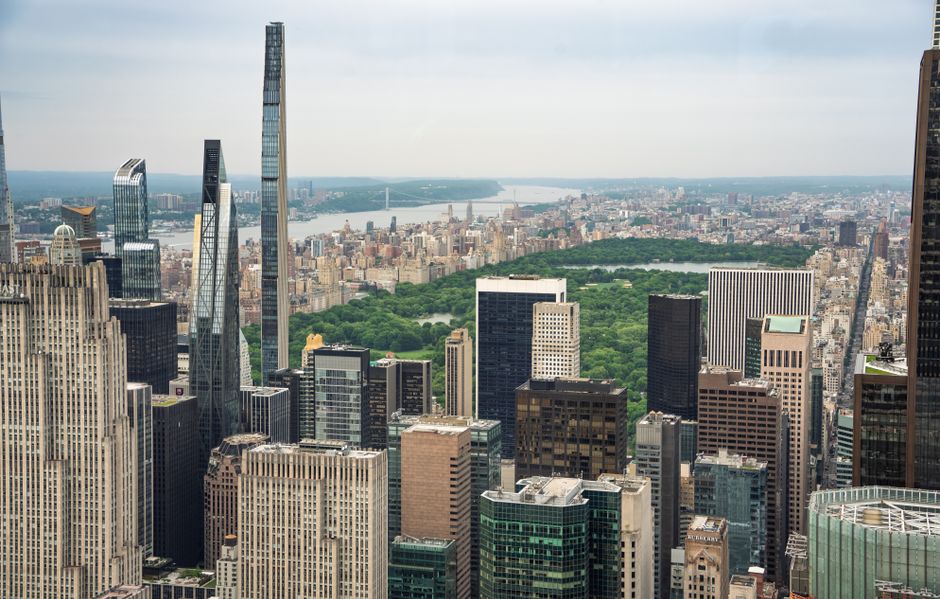
New York City's latest push to address its housing shortage is drawing international scrutiny as mayors from London to Sydney face their own affordability emergencies. The Adams administration's combination of vacancy penalties, zoning modernization, and commercial-to-residential conversion incentives has created a blueprint that some cities are studying—though not all are convinced it goes far enough.
The city's vacant property tax, which took effect earlier this month, imposes penalties ranging from $25,000 to $55,000 annually on residential units sitting empty in Manhattan and Downtown Brooklyn. City officials estimate roughly 16,000 units remain vacant across prime neighborhoods like the Upper West Side and Park Slope, where monthly rents for one-bedroom apartments average $3,200.
Toronto, grappling with a median home price that has skyrocketed to $1.1 million CAD, introduced similar measures last year but with sharper teeth: owners of vacant residential units face tax rates as high as 6 percent of property value. Vancouver went further in 2024, implementing a speculation tax on foreign and domestic investors holding property without renting it out. "New York's approach is more carrot than stick," says urban policy analyst Dr. Rebecca Chen from the School of International and Public Affairs at Columbia University. "They're incentivizing conversion with tax breaks. Toronto and Vancouver are penalizing hoarding."
The comparison extends to zoning reform. Earlier this year, City Council approved changes allowing residential development across more of Midtown Manhattan and parts of Long Island City. London's recent planning liberalization moved in the opposite direction—loosening restrictions on converting offices to housing without full planning approval, a model that avoids the political gridlock New York has historically faced in neighborhoods like the Upper East Side.
Sydney offers perhaps the starkest contrast. Australia's largest city has relied heavily on immigration and construction, adding roughly 50,000 homes annually—triple New York's current production rate. Yet median rents there now exceed $2,500 AUD weekly for a two-bedroom apartment, suggesting volume alone doesn't solve affordability.
City Housing Commissioner Katherine Balter told reporters last week that New York's mixed approach—penalties plus incentives plus zoning flexibility—reflects local political realities. "We're not Toronto or London," she said. "We have different real estate markets, different political cultures."
Still, housing advocates remain skeptical. The Regional Plan Association estimates the city needs 500,000 new units by 2040 to meet demand. Current production sits around 15,000 annually. International comparisons, critics argue, matter less than results. And on that metric, New York's performance lags behind its global competitors.
This article was compiled by AI from the sources linked above and screened before publishing. See our editorial standards.