By the Numbers: How Data Reveals the Hidden Story of New ...
A statistical deep dive into commercial vacancy rates across Manhattan, Brooklyn, and Queens reveals which neighbourhoods are thriving and which are being left behind.
A statistical deep dive into commercial vacancy rates across Manhattan, Brooklyn, and Queens reveals which neighbourhoods are thriving and which are being left behind.
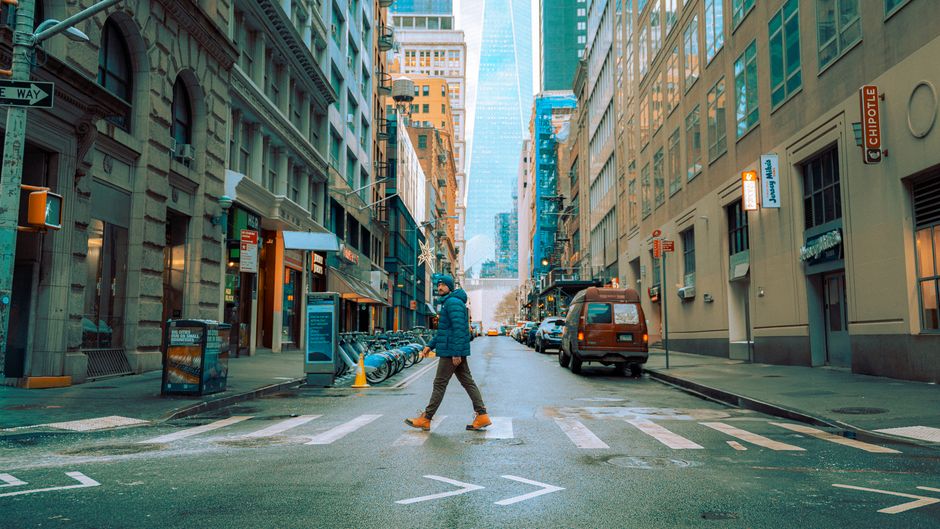
New York's commercial real estate landscape is telling a starkly different story depending on where you look. According to data compiled by the Downtown Manhattan Association and cross-referenced with NYC Department of City Planning records, storefront vacancy rates in lower Manhattan hover at 11.2 percent—the highest in a decade—while neighbourhood business corridors in Astoria, Queens and Park Slope, Brooklyn are experiencing vacancy rates of just 3.8 and 4.1 percent respectively.
The numbers paint a portrait of a city in transition. In the Financial District and surrounding areas, 847 ground-floor retail spaces sit empty, up from 634 in 2024. Meanwhile, commercial rents in midtown Manhattan have climbed to an average of $450 per square foot annually, pricing out the independent retailers that once defined the city's character. By contrast, neighbourhood strips along Broadway in Astoria and along Nostrand Avenue in Bed-Stuy show landlords holding asking prices at $85 to $130 per square foot—making them accessible enough that local entrepreneurs continue opening businesses at rates that outpace closures.
The data extends beyond real estate. The New York City Small Business Services office reports that 34 percent of neighbourhood retail establishments employ fewer than five people—these are the bodegas, the laundromats, the family-run restaurants that define community identity. Yet 2,847 such micro-enterprises closed between January and May 2026 alone, while only 1,204 opened. The net loss accelerates a trend: neighbourhood-based retail employment in outer boroughs has declined 8.3 percent since 2020, even as Manhattan's hospitality sector added 4,200 jobs.
Perhaps most telling are the numbers behind what remains. The Merchants Association of New York found that foot traffic on Lexington Avenue in the Upper East Side dropped 31 percent compared to 2019 levels, yet the same metric showed increases of 19 percent along Fordham Road in the Bronx and 26 percent along Jamaica Avenue in Queens. These aren't random variations—they're signals of where New Yorkers are actually spending time and money in 2026.
For community organizations like the Business Improvement Districts scattered across all five boroughs, these statistics represent both challenge and opportunity. The data suggests that vitality isn't disappearing from New York—it's shifting. Understanding the numbers tells us not where the city is failing, but where its energy is moving next.
This article was compiled by AI from the sources linked above and screened before publishing. See our editorial standards.
How does this story make you feel?
Spread the word
About this article
Published by The Daily New York
Daily brief
Free, in your inbox before 7am. Weekdays.
More in News