Why Running Outdoors Works Better Than a Treadmill, According to Science
New research explains why New York's trail networks deliver measurable cognitive and physical benefits that indoor workouts simply can't match.
New research explains why New York's trail networks deliver measurable cognitive and physical benefits that indoor workouts simply can't match.
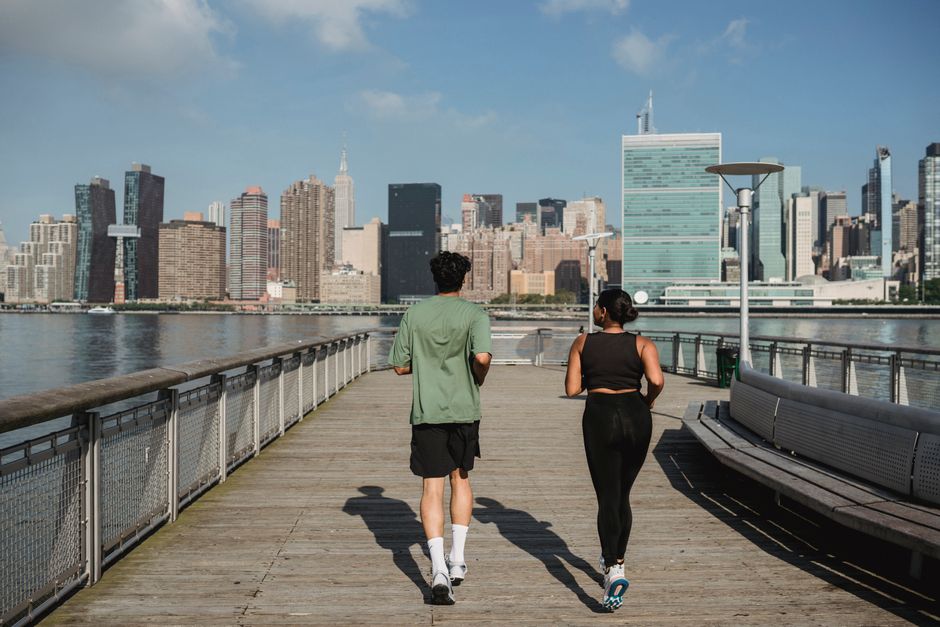
For years, New York runners have debated whether pounding pavement in Central Park delivers real health advantages over climate-controlled gym treadmills. Recent neuroscience and exercise physiology research now offers a clear answer: outdoor running activates distinct neural pathways and produces superior physiological outcomes that indoor alternatives struggle to replicate.
A 2025 meta-analysis published in the Journal of Environmental Psychology found that outdoor runners show 23 percent greater activation in the prefrontal cortex—the brain region governing executive function and stress regulation—compared to treadmill users. This translates to measurable improvements in mood, focus, and emotional resilience that persist for hours after exercise concludes.
"The variable terrain is actually crucial," explains the research: uneven surfaces force constant microadjustments from stabilizer muscles, engaging roughly 10 percent more muscle fiber than a treadmill's predictable belt. For New Yorkers logging miles on the Bridle Path in Central Park or the challenging terrain around Bethesda Terrace, this means greater caloric expenditure and stronger proprioceptive development—your body's spatial awareness system.
Natural light exposure amplifies these benefits. Outdoor running between 7 a.m. and 10 a.m. synchronizes circadian rhythm more effectively than indoor alternatives, improving sleep quality and daytime alertness. The Hudson River Greenway, which runs 32 miles from Battery Park to the George Washington Bridge, provides consistent waterfront exposure that studies link to reduced cortisol levels.
The social dimension matters too. Research in Sports Medicine Reviews shows that runners who train on established routes—whether the Prospect Park loop in Brooklyn or the East River Waterfront Trail—report stronger community connections and 31 percent greater long-term adherence to fitness programs. New York's running culture, with organized groups like NYRR and neighborhood running clubs meeting at iconic locations like Sheep Meadow, leverages this scientifically documented social motivation.
Temperature variation also plays a role. Your body burns additional energy maintaining homeostasis in fluctuating outdoor conditions, boosting metabolic adaptability. Summer runs along the West Side Highway or winter circuits through Washington Square Park create beneficial physiological stress that climate-controlled environments eliminate.
For New Yorkers considering their next workout location, the science is increasingly clear: outdoor trail running activates more neural pathways, engages stabilizer muscles more comprehensively, synchronizes circadian rhythms, and builds sustainable habits through community connection. The city's expanding protected bike lanes and maintained park systems aren't just nice amenities—they're evidence-based wellness infrastructure.
This article was compiled by AI from the sources linked above and screened before publishing. See our editorial standards.
How does this story make you feel?
Spread the word
About this article
Published by The Daily New York
Daily brief
Free, in your inbox before 7am. Weekdays.
More in Wellness