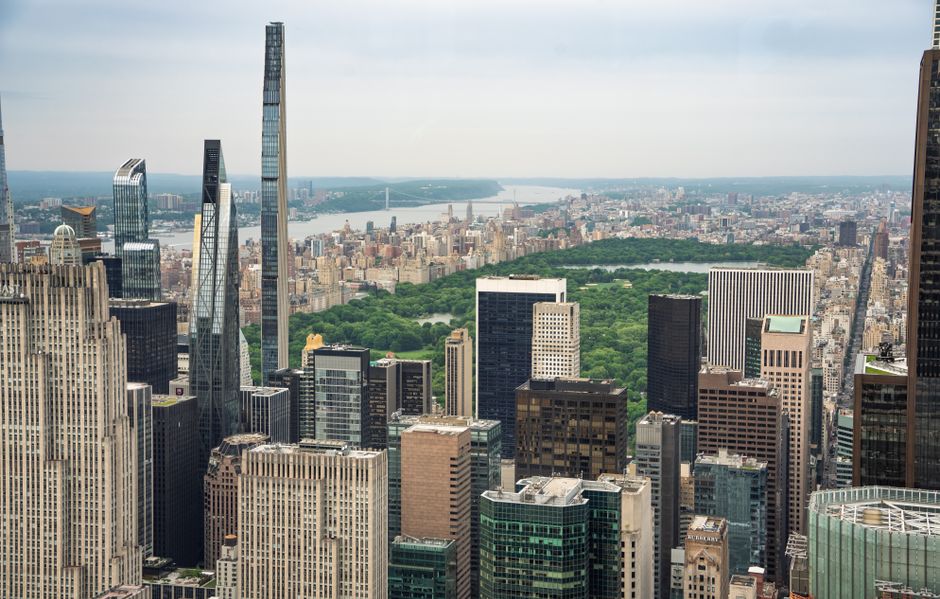
The founders gathering at the WeWork space on Hudson Yards last week weren't just pitching products—they were grappling with a new reality. As geopolitical tensions simmer across the Middle East, supply chains fracture in Africa, and mining partnerships reshape globally, New York's startup ecosystem is feeling the tremors in real time.
The numbers tell the story. Venture capital flowing into New York tech companies dropped 18 percent in the first half of 2026 compared to last year, according to preliminary data from the NY Technology Council. Much of that decline traces directly to international investors reassessing their risk exposure. European and Middle Eastern venture funds—which collectively accounted for roughly 22 percent of funding into Manhattan-based startups two years ago—have become increasingly cautious about long-term commitments amid uncertain geopolitical conditions.
"We're seeing hesitation that didn't exist eighteen months ago," said one partner at a leading Sand Hill Road firm now managing money from a Midtown office. Institutional investors are pulling back on international expansion bets, preferring to concentrate capital domestically.
The talent market is equally disrupted. Startups along the innovation corridor spanning SoHo, Flatiron, and the Meatpacking District typically relied on a global hiring pipeline—engineers from Europe, product managers from Asia, and researchers from across South America. That pipeline has constricted. International visa applications are processing more slowly, while some founders report that top talent is increasingly reluctant to relocate to the U.S. given current instability.
"We lost two senior hires to London startups last month," one CEO of a Series B software company based near Madison Square Park explained. "Five years ago, that wouldn't have happened."
The disruption isn't uniformly negative. Defense-tech and supply-chain optimization companies—sectors focused precisely on navigating global uncertainty—are attracting investor interest. Several accelerators in Brooklyn and Manhattan have launched dedicated cohorts around resilience infrastructure and resource security. One emerging class of founders is building software specifically designed to help companies diversify suppliers and reduce dependency on single geographies.
For New York's innovation economy, the broader lesson is unavoidable: the city's startups can no longer operate as though global conditions are stable background noise. The founders succeeding right now are those building for a world of friction—where instability is the feature, not the bug, of doing business in 2026.
This article was compiled by AI from the sources linked above and screened before publishing. See our editorial standards.