What Wall Street's Office Exodus Really Reveals About Where Capital Is Flowing
As Manhattan's commercial property market sends mixed signals, industry watchers decode what investment patterns tell us about New York's economic future.
As Manhattan's commercial property market sends mixed signals, industry watchers decode what investment patterns tell us about New York's economic future.

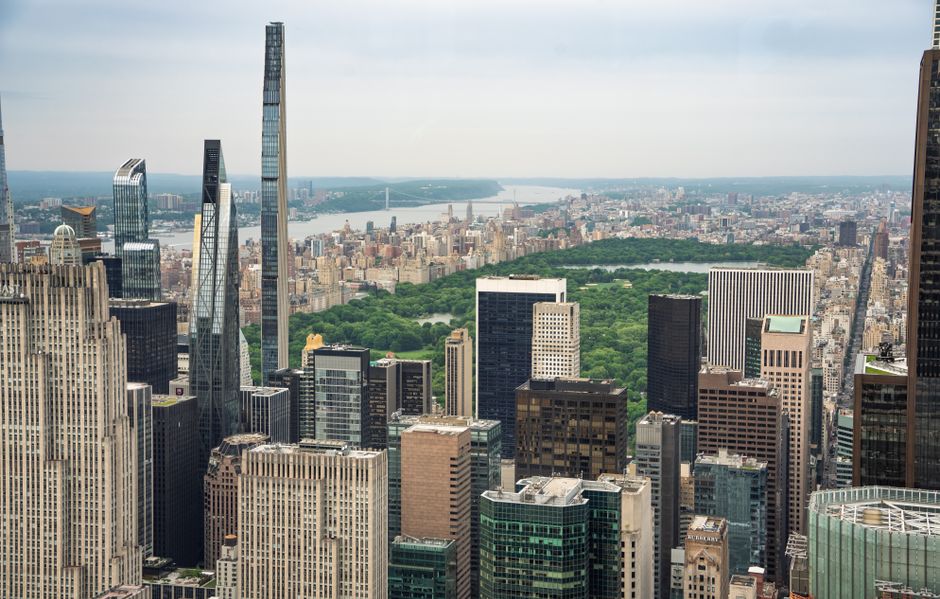
The New York office market has become a barometer of American economic anxiety—and lately, it's been flickering wildly. With vacancy rates hovering near 15 percent in Midtown Manhattan and asking prices for Class A office space along Park Avenue averaging $85 per square foot, the question isn't whether the market is struggling. It's what the underlying investment flows reveal about broader economic confidence.
Recent capital deployment patterns tell a revealing story. While traditional office conversions continue in neighborhoods like Hudson Yards and Long Island City—where Amazon's expansion created spillover demand—the real money is flowing elsewhere. Investment in mixed-use developments, particularly those in lower Manhattan's Financial District and Brooklyn's emerging tech corridors, has accelerated significantly. This shift reflects institutional investors' recalibration of where New York's economic gravity actually lies in 2026.
The numbers are instructive. Commercial real estate investment trusts focused on Manhattan office space saw valuations decline roughly 18 percent year-over-year, according to market analyses, while those holding diverse portfolios that include retail, hospitality, and residential components outperformed. Goldman Sachs' Manhattan office occupancy report indicated that companies are consolidating footprints, trading sprawling floors for premium-located, smaller spaces—a trend particularly visible along Fifth Avenue and in the Empire State Building's recently renovated upper floors.
What explains this recalibration? Three-word answer: hybrid work adoption. But the investment implications run deeper. Capital is moving toward properties that can absorb demand shifts—buildings adaptable for residential conversion, flexible lease structures, or mixed-use potential. Blackstone and other megafunds have quietly accumulated trophy assets in Tribeca and the Upper West Side, betting on residential conversion rather than traditional office leasing.
Meanwhile, suburban markets that surround New York—Connecticut's Stamford and Westchester County—have attracted modest upticks in office leasing as companies seek lower-cost alternatives. This geographic redistribution of economic activity, while small in absolute terms, signals investor nervousness about Manhattan's office-dependent future.
The signals matter because commercial real estate investment flows often precede broader economic moves. When institutional capital redeploys away from traditional office space, it typically reflects updated assumptions about productivity, workforce location, and long-term urban vitality. For New York, the message is clear: the city's economic engines remain robust, but they're redistributing power away from the traditional office tower.
Investors betting on New York's resilience aren't abandoning the city. They're simply being more selective about where its economic future actually resides.
This article was compiled by AI from the sources linked above and screened before publishing. See our editorial standards.
How does this story make you feel?
Spread the word
About this article
Published by The Daily New York
Daily brief
Free, in your inbox before 7am. Weekdays.
More in Business