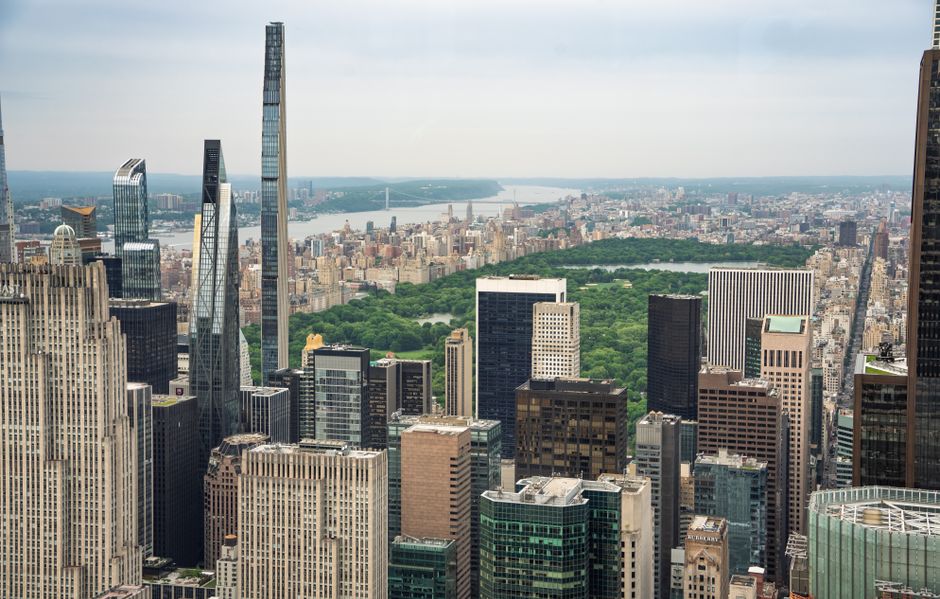
New York's visitor economy, long considered recession-resistant, is sending mixed signals that have major implications for real estate investors and hospitality operators across the city. Hotel occupancy rates in Midtown Manhattan have declined to 84 percent this quarter, down from 89 percent in the same period last year, according to data tracked by CoStar Group. While still respectable by historical standards, the shift is prompting investors to recalibrate where capital flows—and it reveals how quickly tourism economics can reshape urban development priorities.
The decline reflects a structural change rather than a temporary blip. International leisure travel has remained steady, but the average length of stay has shortened to 3.2 nights from 3.8 nights two years ago. Convention business—the high-margin segment that fills hotels like the Marriott Marquis in Times Square for extended bookings—has contracted 12 percent year-over-year. These metrics matter because they directly affect which neighborhoods attract investment.
Consider Astoria, Queens, where venture capital and boutique hotel operators are now directing resources. The neighborhood has attracted approximately $420 million in hospitality and experiential venue development over the past eighteen months, with investors betting on shorter-stay tourists seeking Instagram-worthy cultural experiences over traditional three-night corporate trips. The Museum of the Moving Image expansion, along with new dining and wellness concepts along Steinway Street, exemplifies this pivot.
Meanwhile, traditional Midtown corridors—along Fifth Avenue and around Grand Central Terminal—are seeing investor interest shift toward retail and office-to-residential conversions. The economics are straightforward: if hotel occupancy pressure mounts, per-room revenue cannot sustain pre-pandemic development returns.
The metrics that investors watch most closely have shifted accordingly. Where hotel RevPAR (revenue per available room) once dominated boardroom discussions, hospitality operators and capital allocators now scrutinize cross-category spending data. Visitor spending on attractions, dining, and entertainment now represents 62 percent of tourism-related revenue citywide, up from 48 percent in 2019. This explains why private equity firms are acquiring portfolio companies that bundle experiences—from Broadway tickets to Brooklyn brewery tours—rather than betting solely on sleeping rooms.
For the city's economic planners, these indicators suggest tourism's role is transforming from a volume game into a value-extraction game. The question is whether distributed investment across neighborhoods like Astoria and Williamsburg can absorb capital at the scale previously directed toward Midtown hotel development. The answer will determine whether New York's recovery remains concentrated or becomes genuinely dispersed.
This article was compiled by AI from the sources linked above and screened before publishing. See our editorial standards.