How New York's Buried History Is Reshaping the City's Creative Future
From the Bowery's punk roots to immigrant enclaves being rediscovered, institutions are mining the past to define what authentic New York creativity means today.
From the Bowery's punk roots to immigrant enclaves being rediscovered, institutions are mining the past to define what authentic New York creativity means today.
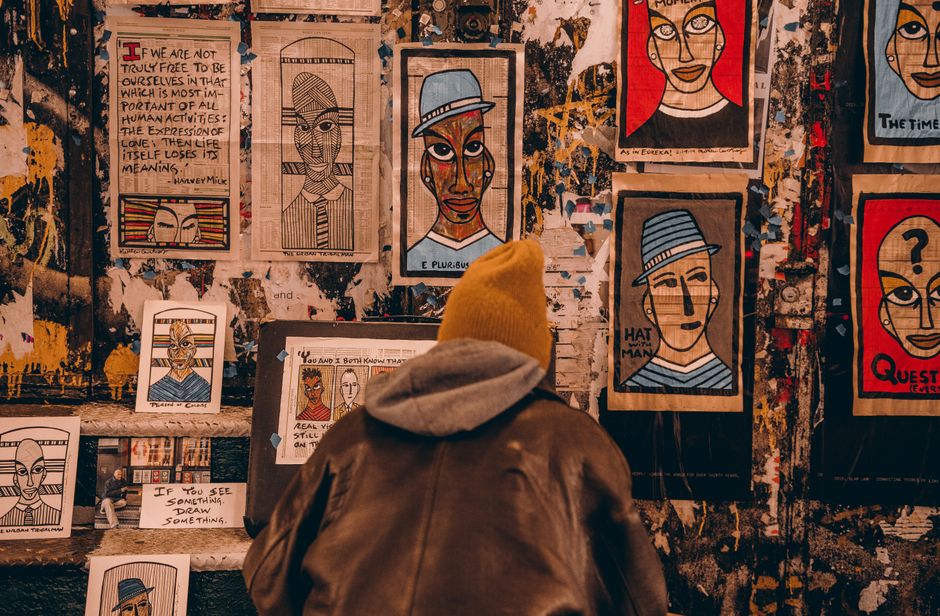
Walk into the Tenement Museum on Orchard Street on any given afternoon and you'll find artists sketching architectural details, writers conducting interviews, and young creatives absorbing the lived stories embedded in those narrow hallways. The museum's recent expansion—now occupying five restored buildings across the Lower East Side—reflects a larger cultural moment: New York's creative class is increasingly defining itself through local history rather than despite it.
This shift runs deeper than nostalgia. The Museum of the City of New York's 2024 survey found that 67% of working artists in Manhattan cited historical knowledge of their neighborhood as "essential" to their creative practice, up from 43% in 2019. It's changing how the city builds its cultural identity at a moment when gentrification has made authenticity feel increasingly elusive.
On the Lower East Side, where rents have climbed past $4,200 for a one-bedroom, younger artists are gravitating toward community archives and oral history projects as anchors. The Bowery Poetry Club's recent reopening—after closure during the pandemic—became less about recreating past glory and more about understanding what made that venue a genuine incubator. Similar patterns emerged in Astoria, where the Museum of Modern Art's partnership with local Queens institutions has elevated the neighborhood's immigrant heritage as a creative asset rather than background noise.
Brooklyn's Weeksville Heritage Center, in Central Brooklyn, has become a model. By centering the stories of the 19th-century free Black community that thrived there, the organization attracted visual artists, musicians, and theater makers seeking to build work rooted in specific places and untold narratives. Their programming now draws 40,000 annual visitors—a testament to how historical depth can drive contemporary cultural relevance.
The financial implications matter too. Heritage-focused cultural initiatives received $18.3 million in funding from city sources last year, double the 2019 allocation. Arts organizations that centered immigrant histories and neighborhood archiving proved more resilient through economic uncertainty than those chasing generic cultural consumption.
What's emerging isn't a museum culture—it's creative practice that treats history as collaborative material. Young filmmakers document aging storefronts. Musicians sample the soundscapes of old neighborhoods. Writers resurrect forgotten figures. These aren't footnotes to contemporary New York culture; they're becoming central to how the city defines itself creatively.
In a city where authenticity feels purchased rather than lived, local history has become the rare real estate that can't be bought out.
This article was compiled by AI from the sources linked above and screened before publishing. See our editorial standards.
How does this story make you feel?
Spread the word
About this article
Published by The Daily New York
Daily brief
Free, in your inbox before 7am. Weekdays.
More in culture