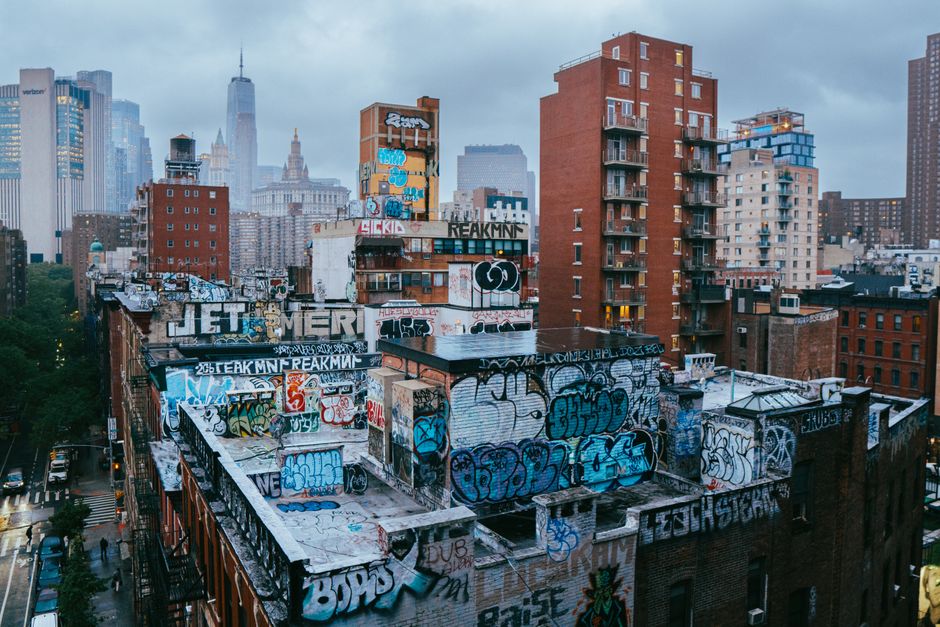
Walk down a Brooklyn street today and you'll see elaborately painted murals on converted warehouse walls, curated outdoor galleries in Williamsburg, and design studios commanding six-figure rents in neighborhoods that were industrial wastelands three decades ago. This is the legacy of New York's street art evolution—a journey from criminalized subway graffiti to city-sanctioned creative districts that now anchor the city's cultural economy.
The story begins in the South Bronx during the early 1970s, where young artists began tagging subway cars as a form of expression and territorial identity. By the 1980s, figures like Jean-Michel Basquiat had elevated street aesthetics into fine art galleries, blurring lines between vandalism and legitimate practice. The Transit Authority's aggressive buffing campaigns only fueled the movement's growth, transforming the underground into an unlikely museum of ephemeral art.
The real turning point came in the 1990s and 2000s, when property owners and city planners began recognizing street art's economic potential. Neighborhoods like Williamsburg in Brooklyn saw rapid transformation as developers courted street artists to legitimize industrial conversions. Legal walls emerged—5Pointz in Long Island City became an iconic legal graffiti mecca before its controversial 2013 demolition, while Bushwick's warehouse district became an open-air gallery attracting 100,000+ visitors annually.
Today's landscape reflects this legitimization. The Bowery Mural Project, founded in 2008, has commissioned over 150 murals in lower Manhattan. Williamsburg's street art generates roughly $530 million in annual economic impact for Brooklyn, according to local development studies. Landlords actively recruit muralists; a single commissioned piece can cost $15,000 to $50,000, far removed from spray-painted rebellion.
Yet tensions persist. Williamsburg's original street artists—those who created the district's aesthetic—are increasingly priced out. Rents have climbed from $800 monthly for industrial spaces in 2005 to $3,500+ today. Astoria in Queens and Ridgewood represent the current frontier, where younger artists and emerging galleries seek affordable real estate, repeating the cycle.
The institutionalization has brought undeniable benefits: emerging artists now access legal platforms, galleries like Welling Court Mural Project in Astoria provide exhibition opportunities, and design schools celebrate street aesthetics as legitimate practice. New York's street art districts have become destinations, with Instagram tourism reshaping neighborhood demographics.
What began as transgressive rebellion has become a carefully managed cultural product. Whether that represents success or co-option depends largely on who you ask—and how much you pay in rent.
This article was compiled by AI from the sources linked above and screened before publishing. See our editorial standards.